

Construction has begun on Aliko Dangote's planned $16 billion oil refinery in Kenya, marking a major expansion of the Nigerian billionaire's energy business into East Africa.
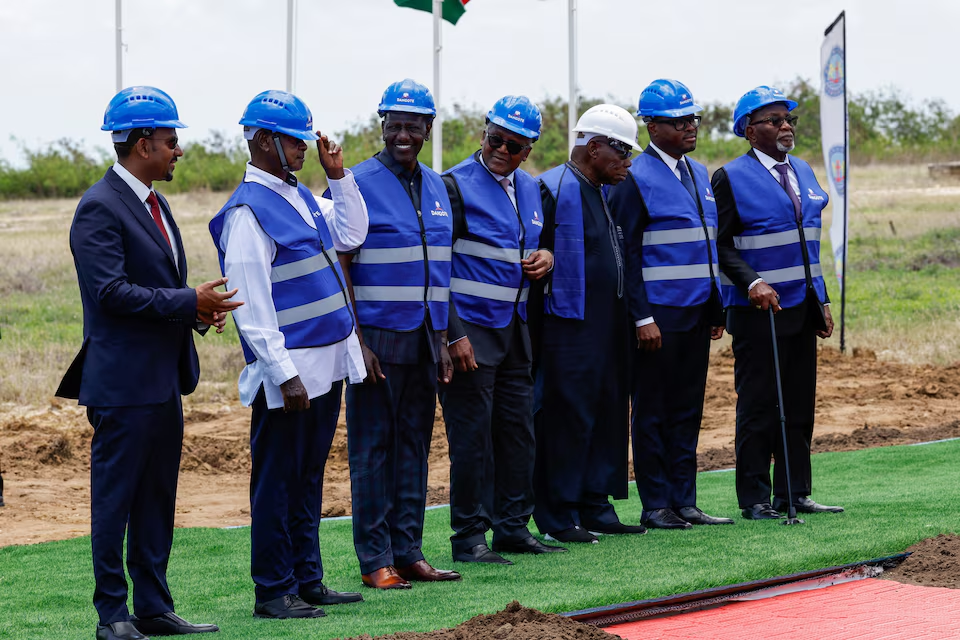
Dangote and Kenyan President William Ruto officially broke ground for the project on Wednesday at Lamu Port, where the refinery is planned to be built. The facility is expected to have a processing capacity of 700,000 barrels of crude oil per day and is scheduled for completion in 2030.
The project is being designed around the same large-scale refining model that Dangote used in Nigeria. His Lagos refinery currently has a capacity of about 700,000 barrels per day, with plans to eventually expand that facility to around 1.4 million barrels per day.
For Kenya and other countries in the region, the new refinery is intended to reduce the amount of refined petroleum products that must be imported from outside Africa. Supporters of the project say producing more fuel closer to East African markets could improve supply security and reduce exposure to international fuel-price shocks.
Dangote has also offered East African governments a combined 30% ownership stake in the Kenyan refinery. Kenya, Ethiopia and Rwanda have previously expressed interest in participating, with regional governments looking at the project as a strategic energy investment rather than simply a commercial refinery.
The refinery is expected to become Kenya's largest-ever foreign direct investment. President Ruto has said the project could increase Kenya's annual gross domestic product by 12%, while also creating jobs, supporting industrial development and strengthening the country's position as an energy hub.
"It is an investment in energy security, industrialisation and regional integration," he said.
Dangote has described the refinery as part of a broader effort to make East Africa less dependent on imported refined petroleum products. The project is intended to serve markets beyond Kenya, potentially supplying countries across a region stretching from Ethiopia to Mozambique.
"We are breaking ground for a new chapter in Africa's industrial journey to a brighter future," he said.
The development also represents a major step in Dangote's plan to take his refining model beyond Nigeria. The proposed Kenyan facility will give the group a refining presence on Africa's eastern coast, complementing its existing operations on the western side of the continent.
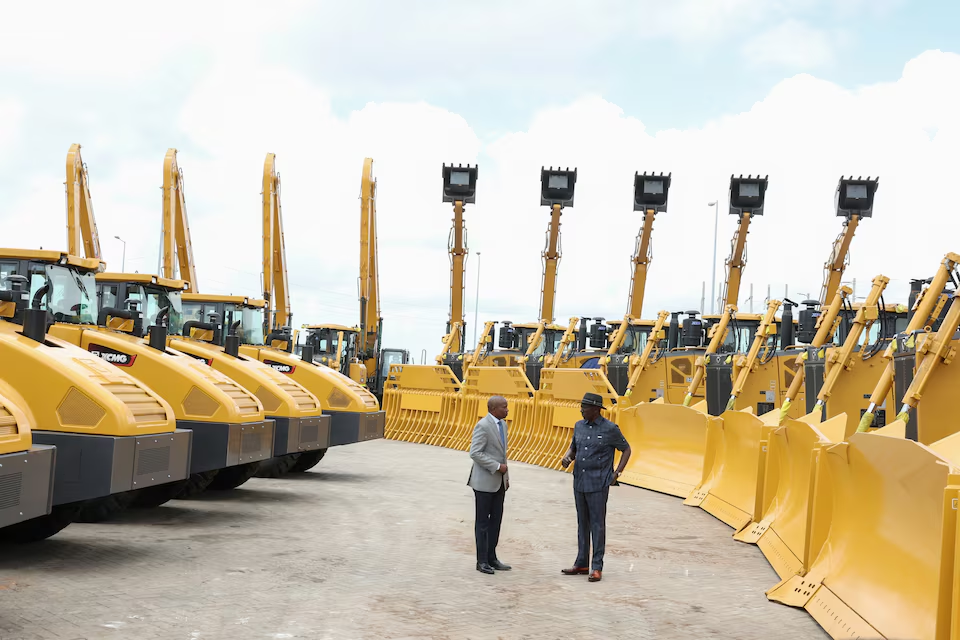
The groundbreaking ceremony took place at Lamu Port, where construction equipment was already visible as preparations for the project advanced. Dangote and Ruto were joined by Ethiopia's Prime Minister Abiy Ahmed, Uganda's President Yoweri Museveni, Benin's President Romuald Wadagni and Togo's President Jean-Lucien Savi de Tové.
Excavators, graders, rollers and cranes lined the construction area, giving local residents a visible sign that the long-discussed refinery project was moving into its construction phase.
"I am very hopeful when I see these machines lined up here because I know I have a chance to work and change my life from my menial jobs now to become a machine operator which is what I'm trained to do," said local resident Evans Hundo.
The arrival of construction equipment has added to expectations that the refinery could generate employment for people living around Lamu and create opportunities for workers in construction, engineering, transportation and other supporting industries.
The project is also expected to encourage the development of industries that depend on petroleum products and refinery feedstocks. Officials have pointed to potential growth in areas such as petrochemicals, base oils and bitumen production.
Lamu Port is particularly important to the project because of its location along Kenya's northern coastline. The port welcomed its first cargo ships in 2021 and forms part of the country's wider plan to develop a transport and trade corridor connecting northern Kenya and neighbouring landlocked countries to the Indian Ocean.
The refinery could strengthen that strategy by making Lamu more important not only as a shipping location but also as an energy and industrial centre.
Kenyan officials estimate that demand for petroleum products across the wider region could reach between 20 million and 30 million metric tons annually. Meeting that level of demand would require refining capacity of more than 1 million barrels per day, according to a financier involved in African refinery projects.
The project is therefore being positioned as a regional facility rather than one designed only for the Kenyan market. Once operational, it could supply refined products to Kenya and surrounding countries, potentially reducing the distance and cost involved in importing fuel.
The refinery is also expected to target international markets. Dangote has said the facility could export jet fuel to European and British markets, creating another potential revenue stream for the project.
Dangote's expansion comes as energy markets remain sensitive to geopolitical disruptions and fluctuations in global crude and refined-product prices. Recent fuel-price pressures across East Africa have highlighted the region's dependence on imported petroleum products.
The Kenyan project is expected to include a 1,000-megawatt power plant as part of the wider refinery complex. Dangote has said the facility will generate electricity for the refinery and sell excess power to other customers.
Engineers India Limited has already secured a contract worth about $450 million to provide project management consultancy and engineering, procurement and construction management services for the refinery. The company was also involved in the development of Dangote's refinery in Lagos.
Honeywell Technologies is also involved in the project and will provide technology, engineering support and licensing services. Honeywell has previously worked with Dangote on the Nigerian refinery, giving the companies an existing technical relationship for the Kenyan development.
The Kenyan refinery's shares are expected to eventually be listed on the Nairobi Securities Exchange, giving investors in the country and the wider region a potential opportunity to own part of the project.
Despite the scale of the investment, analysts have warned that building a refinery of this size in Kenya will come with significant challenges.
One of the biggest issues is crude oil supply. Kenya does not currently have enough commercial crude production to independently supply a 700,000-barrel-per-day refinery, meaning the project will need crude from regional producers, international suppliers or a combination of both.
Possible regional sources include crude from countries such as Uganda and South Sudan, but moving that oil to Lamu would require additional infrastructure, pipelines and transportation arrangements.
The refinery will therefore depend not only on the construction of the plant itself but also on the development of a reliable supply chain capable of delivering hundreds of thousands of barrels of crude every day.
Infrastructure is another challenge. Lamu's wider LAPSSET corridor is still developing, and additional storage, pipeline and transportation infrastructure will be needed to support a refinery of this scale.
Environmental concerns have also surrounded the project. Conservation groups and local residents have raised concerns about the possible impact of a large industrial facility on Lamu's coastal environment, including marine ecosystems and the nearby Lamu Old Town, a UNESCO World Heritage Site.
The project has also faced legal challenges involving land rights. A Kenyan court recently ordered parties to maintain the status quo over part of the proposed site, although the order did not expressly prevent the September 30 groundbreaking ceremony from going ahead. The case is scheduled for further consideration in October.
Dangote has dismissed the opposition as being partly driven by traders and businesses that could see their existing profit models disrupted by the arrival of a major refinery.
"We are really not scared about people taking us to court," he said. "Anybody who wants to cause trouble, we are ready for his trouble and we will give him a headache."
If completed as planned, the Kenyan refinery would become one of Africa's largest refining projects and one of Dangote Group's biggest investments outside Nigeria.
The company is pursuing the development at the same time as it prepares to expand its Nigerian refinery from about 700,000 barrels per day toward a potential 1.4 million-barrel-per-day capacity.
That means Dangote is simultaneously building a larger refining network across different parts of Africa, with the Nigerian facility serving West Africa and the proposed Kenyan refinery positioned to serve East Africa and potentially international markets.
For Kenya, the project could mean greater domestic refining capacity, new industrial activity and thousands of direct and indirect jobs. For neighbouring countries, it could provide another source of refined fuel closer to their markets.
For Dangote Group, the Kenyan refinery represents something bigger: an attempt to take the industrial model that transformed its energy business in Nigeria and reproduce it on another side of the continent.
The project will now move from groundbreaking and planning into the much more demanding stages of construction, financing, infrastructure development and crude-supply arrangements, with completion targeted for 2030.