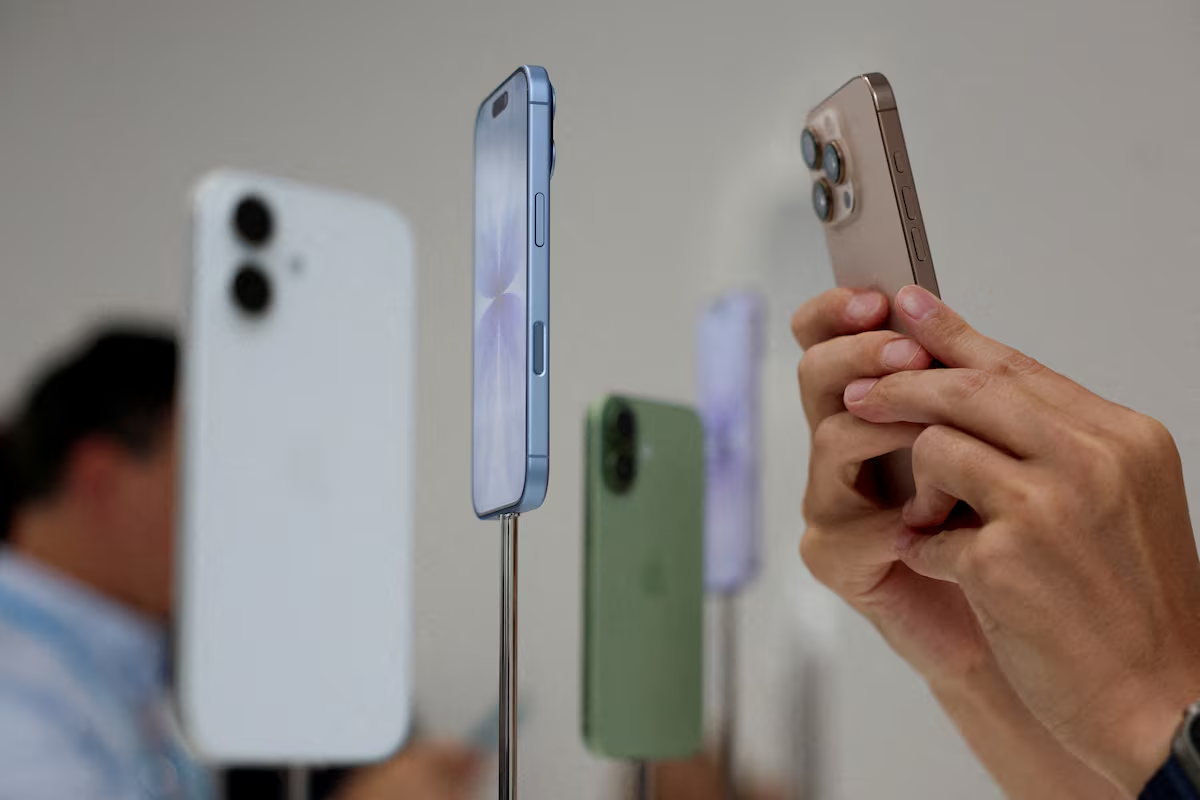

Apple has reached a new milestone in the global smartphone market, capturing a record 22% share of worldwide shipments during the third quarter of 2026. The achievement came during a difficult period for the industry, as rising component costs, limited memory supplies and more expensive devices contributed to a sharp decline in smartphone shipments worldwide.
According to a report from Counterpoint Research, global smartphone shipments fell by 20% year over year during the July-to-September quarter, reaching their lowest third-quarter level in 14 years. The report attributed the downturn to ongoing memory supply constraints and rising prices, although it did not provide an absolute shipment figure alongside the reported decline.
The contrasting performances of Apple and the wider market highlight how competition is changing. While fewer smartphones were shipped globally, Apple increased its share of the total, meaning it accounted for a larger proportion of the devices reaching the market than it did a year earlier.
Apple's 22% share represented a significant increase from the 18% it recorded during the same quarter in 2025. It was also the first time the company had exceeded a 20% share in a third quarter, setting a new record for that period.
However, the increase in market share does not necessarily mean Apple shipped more phones than it did a year earlier. Market share measures a company's portion of total shipments, so a brand can increase its share even when its own shipments decline, provided competitors experience greater reductions.
Apple's performance was supported by continued demand for its existing iPhone 17 lineup and a stronger launch for the premium iPhone 18 Pro models. These devices reportedly attracted particularly strong interest in China and India, two important markets for the company's smartphone business.
The performance of the Pro models helped Apple maintain its position in the premium smartphone segment at a time when many consumers were becoming more cautious about upgrading their devices. Buyers facing higher prices may be less willing to replace their phones frequently, making demand for established models and premium products particularly important to manufacturers.
Apple's overall shipment performance was nevertheless affected by the absence of a standard iPhone 18 model during the quarter. According to the report, this resulted in a smaller initial supply of devices reaching retail channels compared with the previous year's launch of the full iPhone 17 lineup.
This distinction matters because smartphone shipments measure devices sent into distribution channels, rather than the number of phones ultimately purchased and activated by consumers. Launch timing, the availability of particular models and the amount of stock manufacturers send to retailers can therefore influence quarterly market-share figures.
Despite these limitations, Apple's ability to secure a record share during a major industry downturn shows the strength of its position in the global smartphone business. Its combination of premium devices, established customer loyalty and demand across major markets helped it capture a larger portion of a shrinking market.
Samsung remained the world's largest smartphone vendor during the quarter, with a 23% share of global shipments. Apple followed closely at 22%, leaving only a one-percentage-point difference between the two companies.
The narrow gap puts the competition between the two technology giants into sharper focus. Samsung has traditionally benefited from offering devices across a wide range of prices, from budget-friendly smartphones to premium flagship models. Apple, meanwhile, concentrates its smartphone business around the iPhone and has built much of its market position around the premium segment.
Both companies operate at enormous scale, but their product strategies expose them to different parts of the market. Samsung's broad portfolio gives it access to consumers with varying budgets, while Apple's premium positioning allows it to target customers who are willing to pay more for its devices and ecosystem.
The latest figures suggest that Apple is becoming increasingly competitive with Samsung in terms of global shipment share, even as the overall market contracts. However, Samsung retained the lead in the third quarter, and the one-point difference does not establish which company will finish the full year in first place.
Other major smartphone manufacturers faced a more difficult quarter. Xiaomi ranked third with a 10% share of global shipments, followed by OPPO at 9% and vivo at 8%.
The three Chinese manufacturers all recorded lower shipment shares than they had in the third quarter of 2025. Their results reflect the challenges facing brands that compete across multiple price categories, particularly when component costs rise and consumers become more sensitive to the final price of a device.
Companies operating in the lower and middle price ranges can face a difficult choice when memory and other components become more expensive. Raising retail prices may discourage customers who are already working within tight budgets, while keeping prices unchanged can reduce the profit earned on each device.
Manufacturers may also have less flexibility to absorb cost increases when profit margins are already narrow. This can make the effects of component shortages particularly difficult for brands that depend on selling large numbers of affordable smartphones.
The memory crisis has become one of the central pressures affecting the industry. Modern smartphones require memory components to support their operating systems, applications, photography features and increasingly demanding artificial intelligence capabilities. As demand for these components rises across the technology sector, smartphone manufacturers can face tighter supplies and higher purchasing costs.
Memory is also important because manufacturers must secure sufficient quantities before assembling and shipping devices at scale. When supplies become constrained, companies may struggle to obtain the components they need at the right price and on schedule.
The resulting pressure can affect more than production volumes. Manufacturers may need to reconsider product specifications, adjust launch plans, negotiate new supply agreements or increase prices to protect their margins.
Artificial intelligence is another factor influencing demand for advanced memory across the technology industry. Data centres supporting AI systems require substantial computing resources, creating additional competition for certain types of memory and related components. Although smartphone memory and data-centre memory are not interchangeable in every application, broader demand and investment across the memory industry can affect supply conditions and pricing.
These pressures have made it harder for smartphone brands to maintain their usual balance between affordability, technical improvements and profitability.
The industry is consequently moving towards strategies that place greater emphasis on earnings rather than simply shipping as many devices as possible. Instead of pursuing shipment growth at any cost, manufacturers may focus on products that offer stronger margins and customers who are less sensitive to price increases.
Apple is not exempt from these pressures. The company has also moved towards higher prices, although the immediate impact of its own price adjustments was limited to the final weeks of the quarter, according to the report.
Higher prices can help manufacturers offset increased production expenses, but they also risk making upgrades less attractive. Consumers who might previously have replaced their phones every two or three years may decide to keep their current devices for longer if the cost of a new model rises significantly.
That behaviour could create a longer-term challenge for the smartphone market. When customers delay upgrades, manufacturers may see fewer replacement purchases, even if people continue using smartphones every day.
Budget-conscious buyers are particularly exposed to this problem because price increases can represent a larger share of their available spending. If entry-level and midrange smartphones become more expensive, some consumers may postpone purchases, choose older models or look for refurbished alternatives.
This could widen the gap between premium and budget smartphone markets. Customers with greater spending power may continue buying flagship devices, while buyers who depend on affordable phones face fewer attractive options at their preferred price points.
The pressure could also affect the pace at which new smartphone features reach the mass market. Manufacturers may prioritise expensive models that generate higher margins, while the cost of introducing more advanced components into lower-priced devices becomes harder to justify.
For consumers, the consequences may include higher retail prices, fewer discounts and longer periods between upgrades. The extent of these effects will depend on how long memory supply constraints persist and whether component prices begin to stabilise.
For manufacturers, the immediate challenge is to protect profitability without making their products too expensive for customers. Brands that manage their supply chains effectively, maintain strong demand and offer a compelling range of products may be better positioned to navigate the downturn.
Apple's record third-quarter market share demonstrates how a company can strengthen its position even when the overall market is under pressure. Its premium-focused strategy and the reported strength of the iPhone 18 Pro launch helped it gain ground against competitors, although the company also experienced shipment challenges.
Samsung, meanwhile, remains narrowly ahead, with Xiaomi, OPPO and vivo continuing to compete for significant portions of the global market. The results show that the downturn is affecting manufacturers differently rather than producing an identical outcome for every brand.
The next major question is whether global smartphone demand can recover as memory supplies and pricing conditions improve. If component costs remain elevated, manufacturers may continue prioritising higher-margin products, while consumers delay replacing their existing devices.
For now, Apple's 22% share stands out as a notable achievement in a quarter defined by falling shipments and rising costs. But the record also illustrates a wider change in the smartphone industry: gaining market share is becoming increasingly important as manufacturers face greater difficulty growing through volume alone.