
YouTube is making video editing more conversational. The platform has announced a new AI-powered editing feature that will allow creators to describe the changes they want using everyday language instead of manually handling every part of the editing process.
The tool was unveiled during Wednesday’s Made On YouTube event as part of a wider collection of new features designed to help creators produce and manage content more efficiently.
For many creators, editing can take considerably longer than filming. Hours of footage may need to be reviewed, trimmed, rearranged and enhanced before a video is ready to publish.
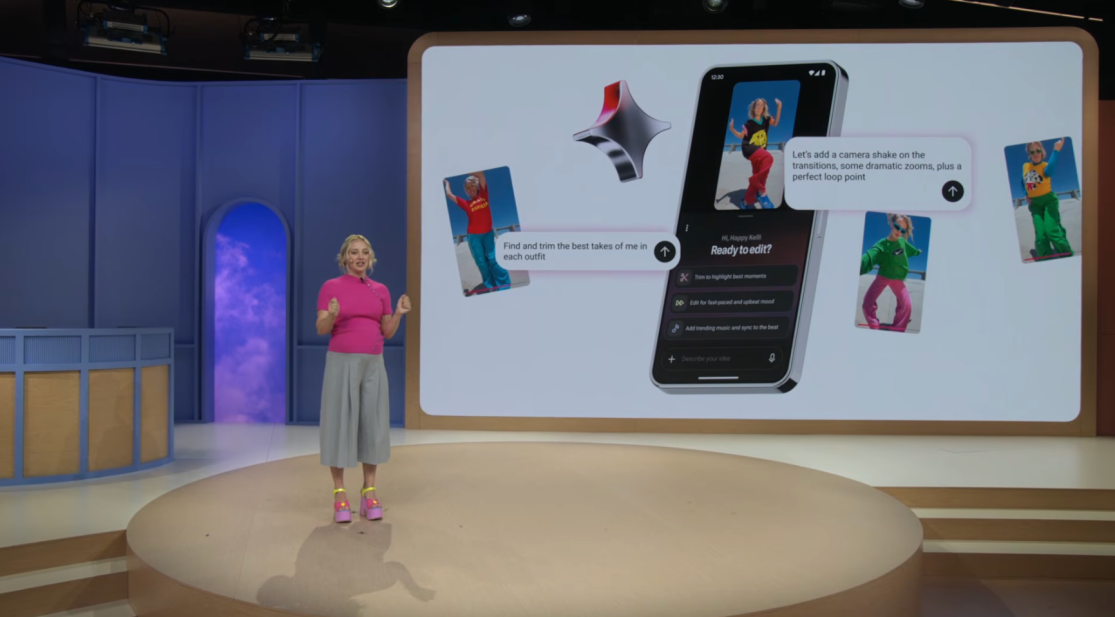
“A one-hour shoot can be 10 hours or more in the edit. So, what if we could speed that process along without sacrificing any of our creative control?” YouTuber Happy Kelli shared onstage.
The new system works through a chat-style interface. Instead of navigating through multiple editing menus and tools, creators can tell the AI what they want it to do, allowing the system to help assemble the video based on those instructions.
During the demonstration, Happy Kelli showed how the feature could be used with footage of her dancing in different outfits. She asked the AI to identify the strongest take for each outfit, helping organize the footage without requiring her to manually review every clip.
She could then give additional instructions, such as adding music and transitions that fit the dance sequences. The idea is to make the editing process feel more like giving directions to an assistant than operating traditional editing software.
“If at any point I want even more control, I can jump back into the editing timeline and manually adjust things myself,” she said. “Overall, conversational editing turns the process of editing into a literal conversation with an infinitely patient helper. It’s a collaborative partner that edits with you, not for you.”
Beyond selecting and arranging footage, the tool can also handle other common editing tasks. Creators will be able to use it to add text overlays, remove unnecessary pauses from speech and make other adjustments based on what they request.
The AI can also use the context of the conversation to suggest possible improvements. This could allow creators to receive editing ideas while they work instead of having to figure out every change themselves.
YouTube’s approach is designed to give creators more flexibility without completely removing manual editing. If a creator wants to make a specific adjustment themselves, they can return to the traditional editing timeline and take control of the process.
That balance could be important for creators whose editing style is a major part of their identity. While some may welcome a tool that reduces repetitive work and gives them more time to focus on filming and storytelling, others may prefer to make every editing decision themselves.
The feature could be particularly useful for creators who regularly produce large amounts of content. Tasks such as sorting clips, cutting long pauses and applying basic transitions can consume significant amounts of time, even when they do not require complex creative decisions.
YouTube is also positioning conversational editing as a way to make video creation more accessible. Creators who may not be highly experienced with traditional editing software could potentially explain what they want in simple language rather than learning how to navigate complicated editing tools.
Conversational editing is expected to become available for YouTube Shorts and the YouTube Create app in early 2027, giving creators another AI-powered option for turning raw footage into finished videos.