YouTube is tightening its approach to AI-generated content by introducing a system that automatically detects and labels videos created or significantly altered using artificial intelligence.
Previously, YouTube relied mainly on creators to disclose when they used AI tools. That system is now being expanded. Starting in May, YouTube will use its internal detection technology to identify videos that include “significant photorealistic AI” and apply labels even if the creator does not disclose it.
The platform says this change is meant to improve transparency as AI video tools become more advanced and harder to distinguish from real footage. These systems are now capable of producing highly realistic visuals that can replicate real people, places, and events, making clear labeling more important.
YouTube has already had AI disclosure rules in place for over two years. Creators were required to mark videos that could realistically be mistaken for real-life footage. However, content that was clearly fictional or animated, such as fantasy scenes or stylized characters, did not need labeling under the old rules.
Under the updated system, YouTube says it will still require creators to disclose AI use, but it will now step in when they fail to do so. If the platform detects AI-generated or heavily altered content, it will automatically add the label itself.
Creators will be allowed to correct misidentified labels if they believe the system made a mistake. However, there is an important limitation: if a video is created using YouTube’s own AI tools, such as Veo or Dream Screen, those labels cannot be removed.
YouTube also confirmed that videos containing C2PA metadata, a technical standard that signals content was fully AI-generated, will automatically carry permanent labels. This standard is already being adopted by several major tech companies, including OpenAI, Nvidia, Kakao, and ElevenLabs.
This update also comes after YouTube expanded its deepfake detection tools, which now allow users to scan for videos that match specific faces, including public figures and celebrities.
Alongside automatic detection, YouTube is also changing how AI labels are displayed to viewers. Previously, labels were often hidden in the expanded video description unless the content involved sensitive topics like health or news, where a more visible warning would appear on the video itself.
Now, the platform is making these labels much more prominent. For long-form videos, AI labels will appear directly below the video player, above the description. On YouTube Shorts, the label will be overlaid directly on the content so viewers see it immediately.
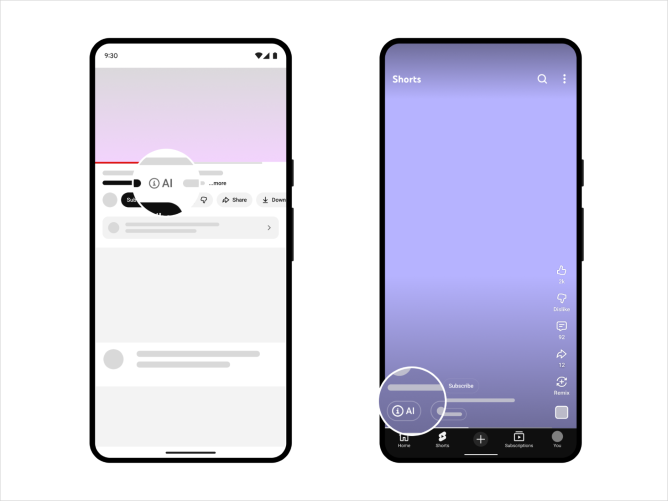
The company says this redesign is intended to make AI-generated or AI-altered content easier to recognize at a glance, especially as such videos become more common on the platform.
However, not all AI content will receive the same level of labeling. If a video only includes minor edits or non-realistic AI elements, such as stylized animations or fantasy scenes, the label will still appear but only in the expanded description rather than prominently on the video.
YouTube also clarified that the presence of AI labels will not affect a video’s ability to be recommended or monetized. In other words, creators will not be penalized simply for using AI tools, as long as they comply with disclosure rules.
Beyond content moderation, YouTube continues to integrate AI into its platform in other ways. The company is actively developing AI-powered features such as interactive search tools, playlist generation for YouTube Music, automated video summaries, and other generative creation tools designed to enhance user experience.
With this latest update, YouTube is signaling a broader shift toward balancing AI innovation with clearer transparency for viewers across its ecosystem.