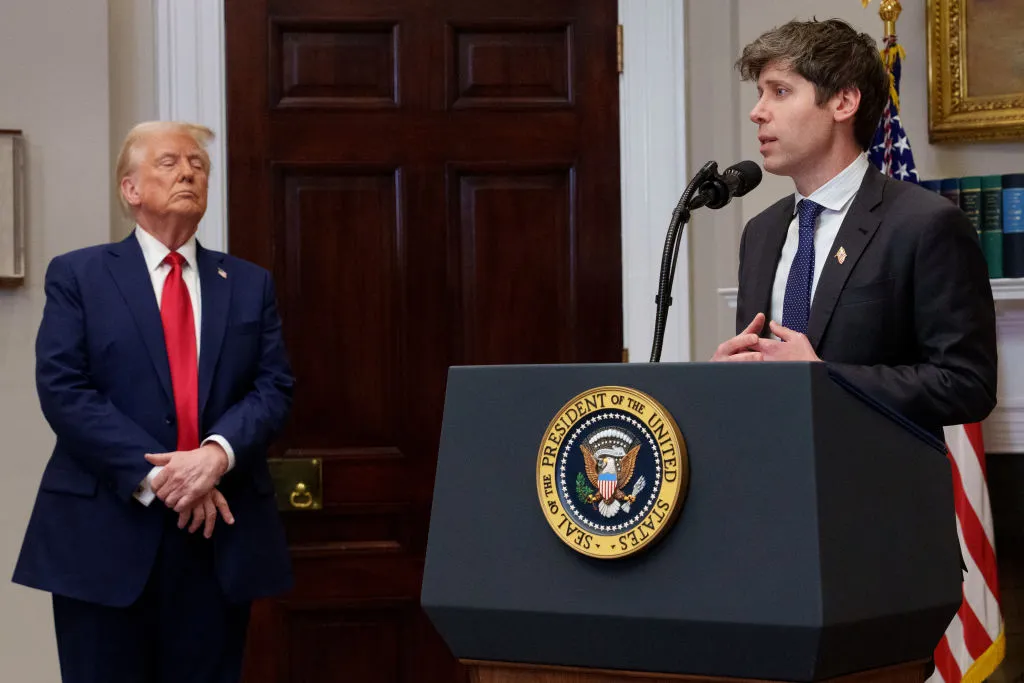

OpenAI CEO Sam Altman has reportedly proposed donating 5% of the company's ownership to a U.S. sovereign wealth fund, according to a report by the Financial Times. The proposal would also encourage other major AI companies to contribute similar ownership stakes, although discussions are still in the early stages and many details remain unresolved.
The reported plan is intended to strengthen relationships with the U.S. government while addressing growing political concerns about the rapid rise and influence of artificial intelligence companies. If implemented, it could allow the American public to directly benefit from the financial success of the AI industry.
The idea follows earlier reports from June, when discussions about a public AI investment fund first surfaced. At the time, U.S. President Donald Trump confirmed that he had spoken about proposals where Americans could effectively become partners in AI companies by receiving a share of their value. However, no percentage of ownership had been mentioned at that stage.
According to reports, the proposal is still preliminary and would likely require approval from Congress before it could become reality. That process could make implementation more complicated and could delay any final decision.
OpenAI has publicly supported the idea of creating a national AI investment fund in recent months. In an April policy paper titled "Industrial Policy for the Intelligence Age," the company suggested establishing a public wealth fund that would invest directly in AI companies and projects.
Under OpenAI's proposal, profits generated by the fund could eventually be shared with American citizens, allowing more people to benefit from the economic growth created by artificial intelligence, regardless of their income or investment experience.
The concept has also attracted attention from lawmakers. In June, Senator Bernie Sanders introduced a more aggressive proposal that would impose a one-time 50% tax on AI company stock. Those shares would then be placed into a public wealth fund under legislation known as the American AI Sovereign Wealth Fund Act.
Sanders' proposal would apply to major AI companies involved in areas such as data centers, robotics, and AI infrastructure. Companies whose businesses extend beyond AI, such as Google and SpaceX, would have the option to separate their non-AI operations to avoid parts of the tax.
For now, both OpenAI's proposal and Sanders' legislation remain under discussion, with no final decisions made. However, the growing debate highlights increasing efforts to ensure the economic benefits of artificial intelligence are shared more broadly as the industry continues to expand.