
YouTube is giving users more control over their recommendations with a new feature that allows them to create personalized video feeds using AI.
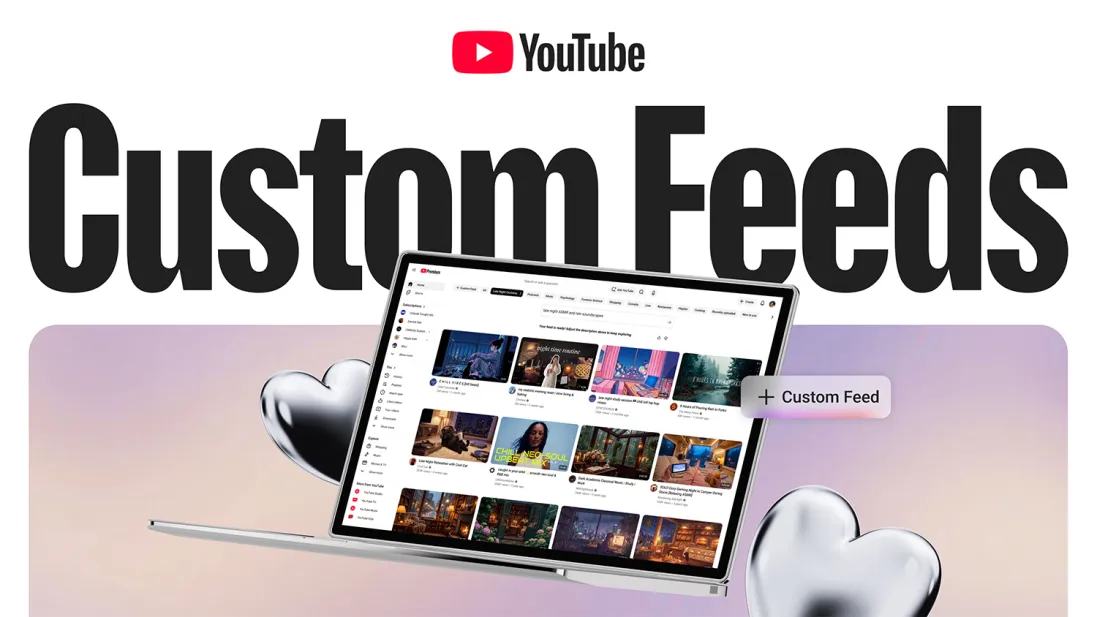
The company announced custom feeds at its Made On YouTube event, introducing a system that lets users describe the type of content they want to see instead of relying entirely on YouTube’s existing recommendation algorithm.
Creating a custom feed starts with a simple prompt. Users can type a description explaining what they want the feed to focus on, and YouTube’s AI will use that information to generate a collection of relevant videos.
The request can be based on almost anything. YouTube suggests that users could create a feed filled with video podcasts that fit a 30-minute train journey, for example.
Someone else could create a feed around a particular mood, such as “relaxing commentary videos to unwind with.”
The system is designed to understand more detailed instructions as well. Users can explain the type of videos they want, what they would rather avoid, which topics should receive more attention and how they want the feed to be curated.
This means users do not have to rely solely on YouTube gradually learning their preferences through their viewing history. Instead, they can directly tell the platform what kind of experience they want.
Google’s Gemini AI will power the feature, helping YouTube interpret each request and select content that matches the description.
Once a custom feed has been created, it will appear in its own tab at the top of the YouTube homepage. Users can then switch between their personalized feed and the platform’s regular recommendations.
Importantly, custom feeds will not replace YouTube’s main home feed. The existing recommendation system will continue to provide the usual mix of videos, while custom feeds will give users additional options for specific interests or situations.
For example, a user could have one custom feed for learning, another for entertainment and another specifically for videos they want to watch during their commute.
The idea reflects a wider trend across social media and digital platforms, where companies are experimenting with ways to let people have more direct control over what their feeds contain.
Bluesky helped popularize the concept of user-created feeds as an alternative to traditional recommendation systems. The platform has since introduced its own AI-powered tool, Attie, to make creating customized feeds easier.
Other platforms have also introduced similar features, including Meta’s Threads and Instagram, X and Spotify.
YouTube believes the feature could be particularly useful because of the enormous amount of content available on its platform.
“One of the amazing things about being on YouTube is that the world is always at your fingertips,” noted Emily Moxley, VP of Product Management for Viewer AI, in a pre-brief with reporters ahead of the Made On YouTube event on Wednesday, where custom feeds were introduced to the public. “There’s over 20 billion videos in the YouTube corpus, so you’re always one search away from a treasure trove of topics.”
With billions of videos available, finding exactly what you want can sometimes require multiple searches or a lot of scrolling. Custom feeds are designed to turn that process into something more personalized and repeatable.
Instead of searching for the same type of content every time, users can create a dedicated feed and return to it whenever they want.
The feature could also change how people use YouTube for different parts of their daily routine. A person might have a feed for a morning workout, another for a daily commute and another for relaxing before bed.
YouTube says users will be able to create multiple custom feeds, giving them the flexibility to build different viewing experiences for different needs.
The rollout will begin next month across YouTube’s web and mobile platforms.
Rather than completely handing control of recommendations to users, YouTube is adding another layer on top of its existing algorithm, allowing people to tell the platform more directly what they want to see.
The result could make YouTube feel less like a single personalized homepage and more like a collection of AI-generated viewing experiences that users can switch between whenever their interests or needs change.