
The United States is pushing a new diplomatic plan aimed at reducing rising tensions between Israel and Lebanon as fighting continues between Israeli forces and Hezbollah.
US Secretary of State Marco Rubio held separate talks with Lebanese President Joseph Aoun and Israeli Prime Minister Benjamin Netanyahu to discuss ways to move toward a gradual reduction in hostilities. A US official said the proposal is focused on creating conditions for a phased calm rather than an immediate full ceasefire.
Under the first phase of the plan, Hezbollah would be expected to stop all attacks on Israel. In exchange, Israel would avoid further military escalation in Beirut. The goal, according to the US official, is to open space for a wider de-escalation process that could eventually lead to a more stable ceasefire.
Lebanese President Joseph Aoun reportedly supported efforts to advance the proposal and reach an agreement. However, Lebanese Parliament Speaker Nabih Berri, who says he can speak for Hezbollah’s position, argued that Israel should be the first to halt military actions. This disagreement highlights ongoing challenges in securing a mutual commitment from both sides.
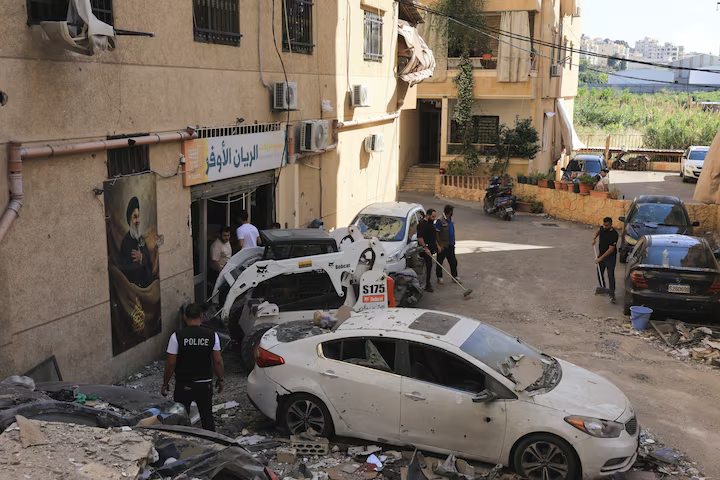
On the Israeli side, Prime Minister Benjamin Netanyahu has continued to take a hard military stance. He recently ordered additional troop movements into Lebanon despite an earlier ceasefire announcement made weeks before. Israel also launched strikes on areas in southern Beirut, which it says are Hezbollah strongholds.
The conflict has also led to casualties. The Israeli military confirmed the death of one soldier during fighting in southern Lebanon, bringing total Israeli deaths linked to the renewed clashes since March to 26, including both soldiers and one civilian contractor.
Lebanese President Aoun has described the situation as a severe and ongoing Israeli assault, saying Lebanon is facing what he called a “fierce aggression.” He also vowed to work toward ending the suffering of civilians, especially in southern regions most affected by the fighting.
Israeli forces have also expanded operations on the ground, reportedly capturing strategic locations in southern Lebanon, including the historic Beaufort Castle and nearby high ground. These advances followed increased cross-border attacks and missile fire, which have disrupted daily life in northern Israel, including school closures.
The US official emphasized that Washington does not expect Israel to continue absorbing attacks on its civilian population without response, signaling that any agreement would need to address security concerns on both sides.
The proposed plan remains under negotiation, with diplomatic efforts ongoing as the situation on the ground continues to escalate.