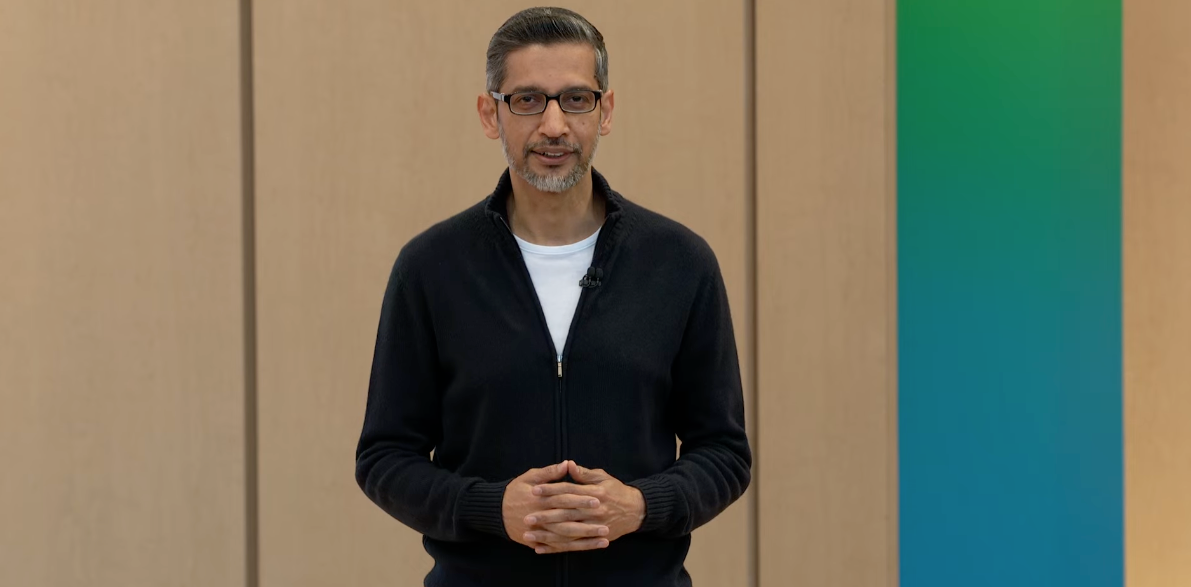

Google CEO Sundar Pichai faced a tense reception over the weekend while speaking at Stanford University’s graduation ceremony, where he once studied materials science and engineering. What was meant to be a celebratory return to campus turned into a moment of public protest, as a portion of graduating students walked out while others booed during his address.
Reports say around 200 students left the ceremony in protest, while those who remained voiced opposition loudly inside the venue. The disruption stood out as one of the more visible examples of rising tension between Big Tech leaders and younger audiences at public academic events.
The main issue raised by protesters centered on Google’s involvement in government and military-related contracts. This includes Project Nimbus, a $1.2 billion cloud computing agreement shared with Amazon that provides AI and infrastructure services to the Israeli military. Protesters also raised concerns about Google’s reported collaboration with U.S. Immigration and Customs Enforcement (ICE).
Inside the venue, students displayed signs with strong messages such as “ICE SPIES WITH GOOGLE AI,” “GENOCIDE RUNS ON GOOGLE,” and “FREE FREE PALESTINE.” Many also waved Palestinian flags and chanted slogans calling for Palestinian freedom, according to videos shared online and statements from organizers.
A group statement linked to the protest explained the reasoning behind the walkout, saying: “We are walking out because we refuse to glorify the corporations that fuel this violence and exercise our power to choose differently.”
The demonstration was organized by multiple student activist groups, including Stanford Students for Justice in Palestine, No Tech for Apartheid, and Tech for Liberation. These groups have been increasingly active in pushing universities and tech companies to take clearer positions on global political conflicts.
Google has faced ongoing scrutiny over Project Nimbus, especially as the conflict in Gaza has intensified global debate around the role of technology in warfare and surveillance. In 2024, Google reportedly fired 28 employees who protested the contract, but internal criticism and activism have continued within the company since then.
Rights groups like the Electronic Frontier Foundation have also criticized major tech firms, including Google, for their involvement in government contracts tied to surveillance and military operations. They argue that companies are not doing enough to prevent their technologies from being used in ways that could harm civilians.
Project Nimbus has also drawn attention to other tech giants. Amazon remains a key partner in the contract, while Microsoft has faced separate criticism over its cloud services being used in military contexts, leading to partial restrictions after internal reviews.
The protest at Stanford also sparked backlash from some business leaders online. Vinod Khosla, co-founder of Sun Microsystems, publicly condemned the demonstration on X, calling it “biased, idiotic, short-sighted and very selfish,” and arguing that critics were ignoring broader global benefits of artificial intelligence.
Pichai’s appearance reflects a broader trend seen at university graduations across the United States, where tech executives have increasingly faced public criticism. While some backlash is tied to general concerns about artificial intelligence and job security, the Stanford protest was more directly focused on Google’s specific corporate decisions and partnerships.