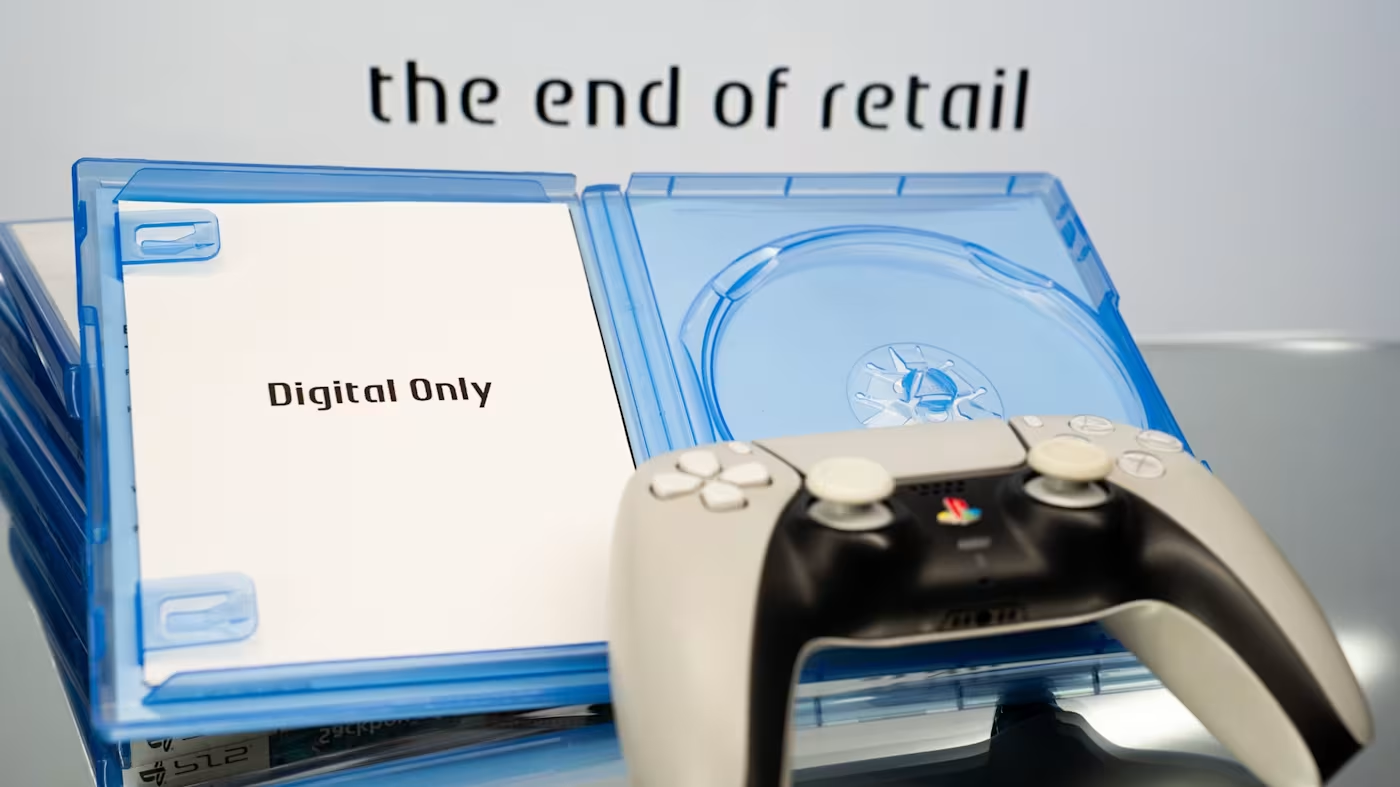

Sony has reaffirmed its decision to stop releasing physical discs for all first-party PlayStation games beginning in January 2028, marking one of the biggest changes in the history of the PlayStation brand.
During the company's latest earnings call, Sony Chief Financial Officer Lin Tao addressed the growing backlash from gamers who prefer owning physical copies of their favorite titles. While acknowledging the emotional connection many players have with boxed games, Tao said the company believes the future of gaming is increasingly digital.
"There are various reasons we made this decision, the biggest being that the digitalization of content overall has been progressing," Tao said through an interpreter. "It's not just for PlayStation, but for all kinds of content."
She explained that Sony carefully considered the decision before moving forward. "When we think about the future—we put in a lot of thought and time, and we cautiously considered this—and we came to this conclusion, and we're going to cautiously move this forward," Tao said. "We have received various opinions and people have strong views... Games are loved by many people. It's a form of entertainment that's loved by people, and it's connected to people's fond memories in many cases. We understand those emotions."
Under the new policy, all PlayStation games released before January 2028 will continue to be available on Blu-ray discs. However, every new first-party PlayStation title released after that date will be sold only as a digital download.
Sony is not completely removing retailers from the process. Instead of selling game discs, stores will offer physical game boxes that contain a digital download code, allowing customers to purchase games in person while downloading them directly to their consoles.
The company says the change reflects how most PlayStation owners already buy games. According to Sony's financial data, between 82% and 85% of PS4 and PS5 game purchases are now made digitally. Digital sales also generate higher profit margins because Sony no longer has to manufacture, package, and distribute physical discs.
Moving away from physical media also gives Sony more control over game pricing since digital titles cannot be resold through the secondhand market. In addition, facilities previously used to manufacture Blu-ray discs can be redirected toward producing other products, including components used in artificial intelligence technologies.
The announcement comes during a period of major changes for PlayStation. Over the past year, Sony has increased the prices of PS5 consoles in several regions, citing inflation, rising manufacturing costs, and memory chip shortages. The company has also raised the price of PlayStation Plus subscriptions in multiple markets, while the cost of officially licensed PS5 SSD storage upgrades has continued to climb.
Industry analysts have also suggested that ongoing shortages of advanced hardware components could affect the production timeline for the next-generation PlayStation 6, although Sony has not officially commented on those reports.
During the earnings call, investors also questioned whether eliminating physical discs could weaken PlayStation's relationship with retailers or make the console less distinct from high-end gaming PCs. Tao dismissed those concerns, saying PlayStation's biggest strengths lie elsewhere.
"We don't feel that the disc is the factor to differentiate [PlayStation] from the PC," she said. "The curated content is one of our strengths, and the game environment being stable, that's another strength. Compared to the high-end gaming PC, our product is more affordable."
Although many fans continue to advocate for physical game ownership, Sony says it believes digital distribution is the long-term future of gaming and plans to move ahead with its strategy as scheduled in 2028.