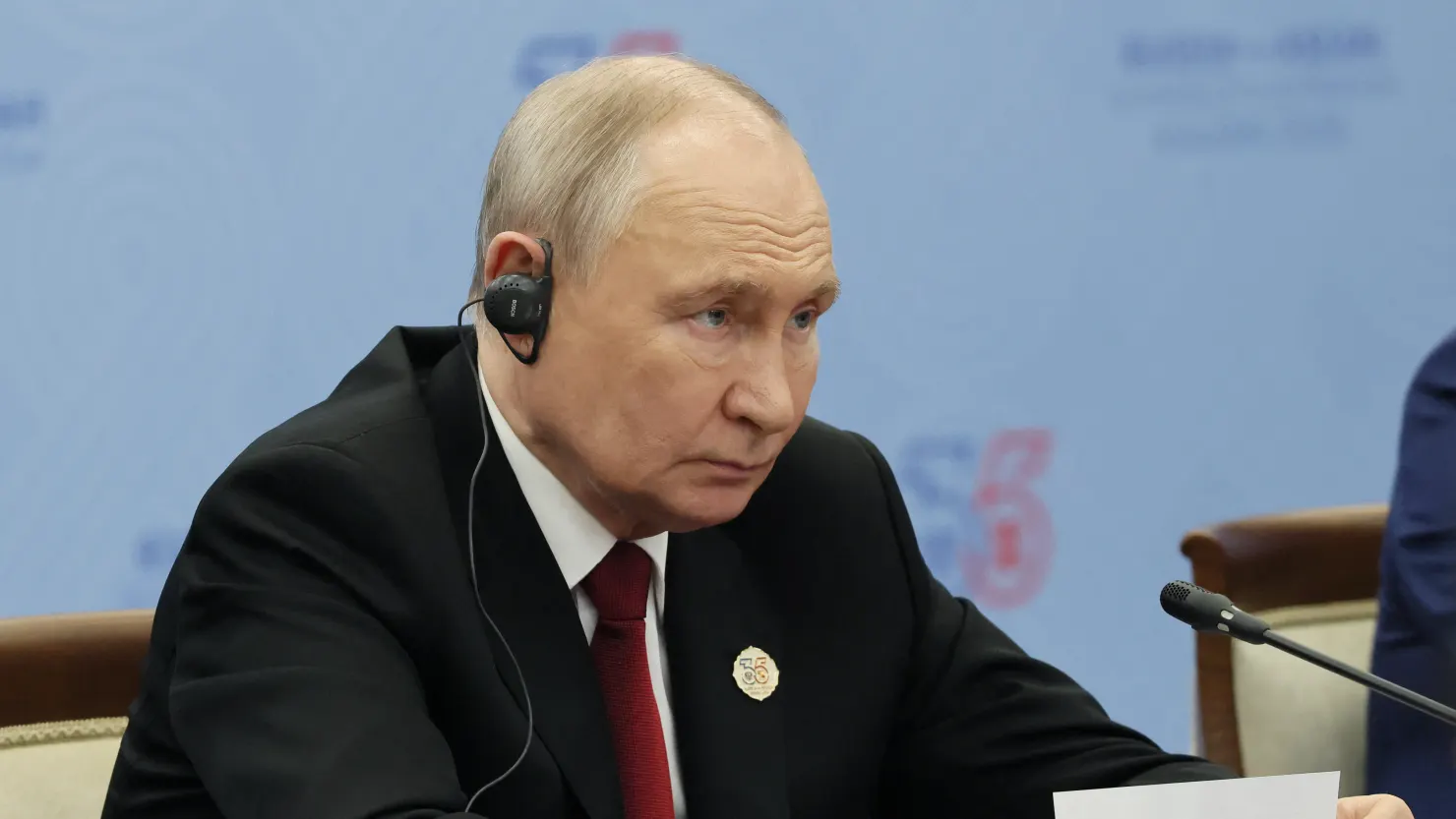

Russia has warned it will respond with more frequent and “massive group strikes” against Ukraine after Kyiv carried out an unprecedented drone assault on Moscow, hitting key infrastructure and setting off explosions at a major oil refinery in the Russian capital.
The attack, which took place late Wednesday into Thursday, involved nearly 200 drones and marked the largest strike ever launched against Moscow. Ukrainian forces reportedly targeted multiple sites across the city, with the main focus being a large Gazprom-operated oil refinery located in the south-eastern outskirts of the capital.
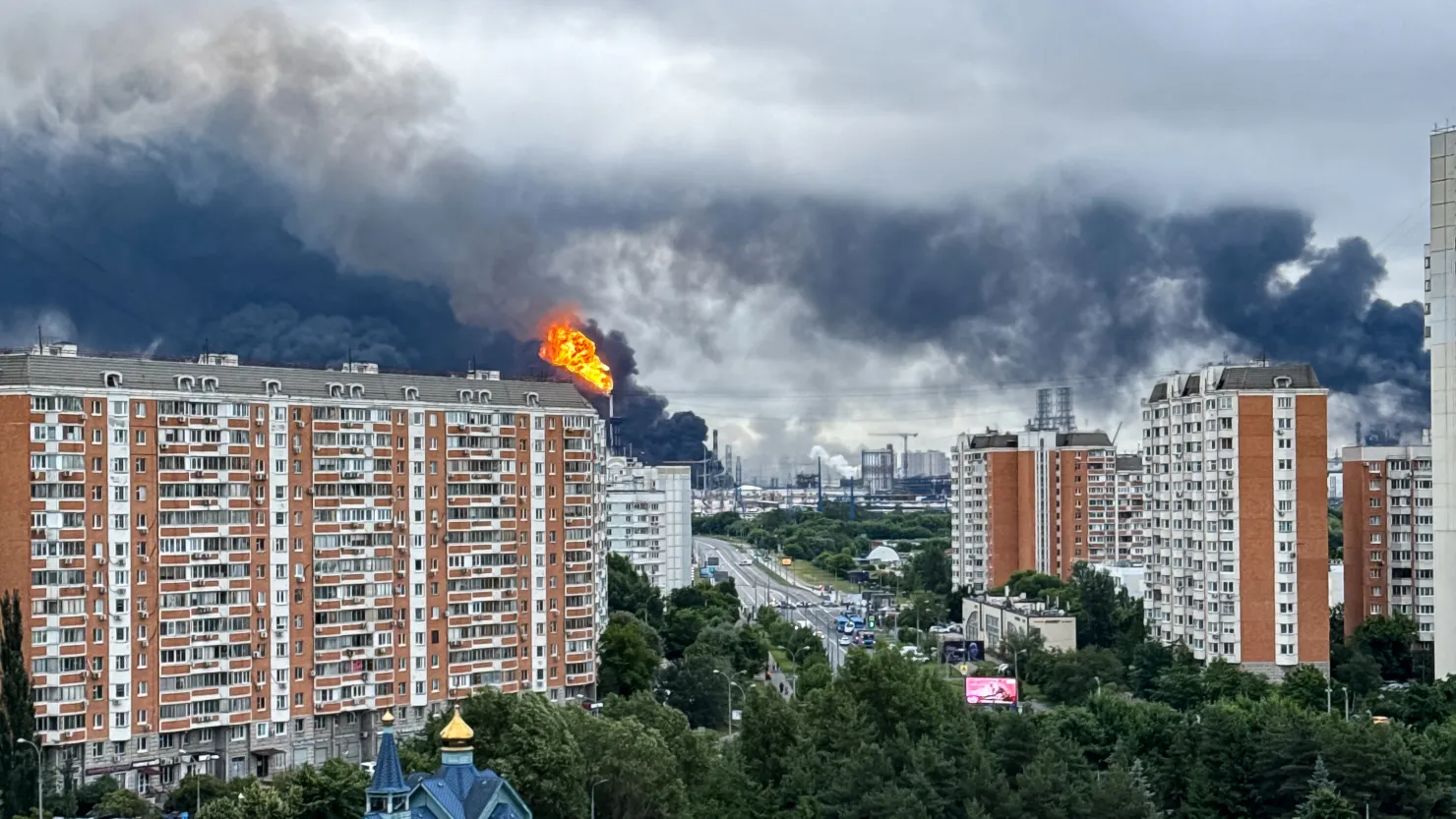
Black smoke rises from the area of the Russian oil producer Gazprom Neft’s Moscow oil refinery on the south-eastern outskirts of Moscow on June 18, 2026.
The scale of the assault caused widespread disruption. Russian officials confirmed that 16 people were injured, while operations at four major Moscow airports were temporarily suspended as air defense systems responded to incoming drones. Videos and images from the aftermath showed thick black smoke rising from the refinery, which has been repeatedly hit in recent weeks as Ukraine intensifies its long-range campaign.
“It is no coincidence that the president announced some time ago, after yet another Kyiv terrorist attack, that we will now conduct massive group strikes on a regular basis against targets whose condition directly affects the combat readiness of the Ukrainian Armed Forces,” Russian Foreign Minister Sergei Lavrov told reporters on the sidelines of an event in Kazan on Thursday, according to Interfax.
Russia has argued that Ukraine’s repeated strikes on its energy sector are aimed at weakening its military capabilities by cutting off revenue from oil infrastructure, which remains one of Moscow’s most important economic pillars.
Ukraine, however, maintains that the attacks are a direct response to ongoing Russian strikes on Ukrainian territory. President Volodymyr Zelenskyy said the Moscow operation followed a recent Russian strike on the Pechersk Lavra monastery in Kyiv, a historic religious site, although Russian officials have denied responsibility for that attack.
“This is a fully justified response to Russian attacks on our cities and communities, and another important result of our warriors’ work against facilities that sustain Russia’s war machine,” Zelenskyy said in a social media post on Thursday.
“In recent days, all of our partners have noted the precision and effectiveness of our mid-range strikes and long-range sanctions. It is time the war ended, and Russia must take the necessary steps in diplomacy,” he added.
The escalation has also drawn attention from military analysts and Russian war bloggers, who expressed concern over the effectiveness of Russia’s air defenses and the growing frequency of Ukrainian strikes deep inside Russian territory. According to the Institute for the Study of War (ISW), the attacks highlight increasing vulnerabilities in Russia’s ability to protect heavily fortified cities like Moscow and St. Petersburg.
The ISW further noted that Ukraine’s expanding long-range strike capability is creating both military and political pressure on the Kremlin, particularly as the war enters a more complex phase with both sides escalating attacks on strategic infrastructure.
Ukraine continues to push for stronger international backing as it seeks to maintain momentum in its long-range campaign while also securing diplomatic support for ending the war on favorable terms.
In Washington, U.S. President Donald Trump said earlier in the week that he is considering additional assistance for Ukraine, while also urging Russia to pursue a negotiated settlement. “I’m going to do whatever I can,” Trump told reporters on Tuesday, adding that he had recently spoken with both Zelenskyy and Russian President Vladimir Putin.
He said both leaders had acknowledged the heavy toll of the conflict, noting that each side had suffered “tremendous amounts of people” since the war began.