
Robinhood is stepping deeper into AI-powered finance by launching a system that allows AI agents to trade stocks on behalf of users, marking a major shift in how retail investing tools are evolving.
The company announced on Wednesday that it is introducing “AI agentic trading,” along with a new AI-powered virtual credit card system designed for automated payments. These tools are meant to let users connect artificial intelligence agents directly to their Robinhood accounts in a controlled and monitored way.
At the center of this update is a new setup where users can create a separate account specifically for their AI agent. This account is linked to a dedicated wallet funded with a pre-loaded balance. The AI agent can analyze market data, study a user’s portfolio, and suggest investment strategies, but it can only trade using the money inside that restricted wallet.
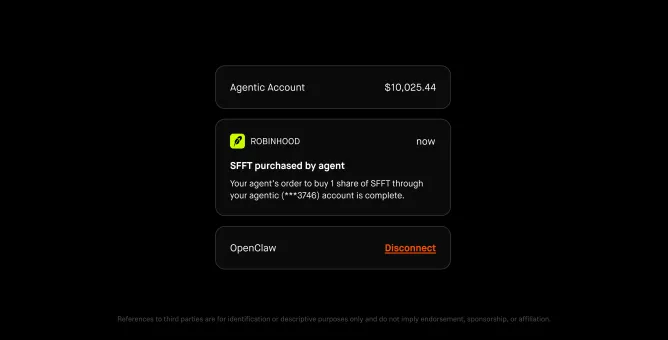
Robinhood emphasized that users remain in full control. Every trade made by an AI agent is visible inside the app, and users receive notifications in real time. In some cases, the AI will only propose a trade first, requiring manual approval before execution. This gives users a safety layer before any financial action is taken.
To further protect users, Robinhood said it has added fraud detection systems. If the platform detects suspicious trading behavior, its internal team will review the activity and help resolve any disputes or irregular actions.
The AI agents will also be able to connect to Robinhood’s Model Context Protocol (MCP) system, which gives them access to deeper financial analysis tools. Through this connection, agents can evaluate portfolio concentration risks, review exposure across different sectors, scan analyst reports, and identify potential investment opportunities across markets.
At launch, the AI trading feature is in beta and limited strictly to stock trading. However, Robinhood plans to expand support in the future to include options, cryptocurrency, futures, event contracts, and prediction markets, turning the system into a broader automated trading ecosystem.
Alongside trading tools, Robinhood is also introducing a virtual credit card designed specifically for AI agents. This card allows agents to make payments through a connected banking MCP system. The feature is currently limited to users who hold the Robinhood Gold Card.
Users can set monthly spending limits for their AI agents and decide whether each transaction requires approval before going through. This gives users flexibility to automate payments while still maintaining oversight and control over spending behavior.
Robinhood also confirmed that its upcoming Platinum Card will support similar AI payment features once it launches later in the year, expanding the company’s push into AI-driven financial services.
This move builds on Robinhood’s growing focus on artificial intelligence. In 2024, the company acquired Pluto, an AI-powered investment research platform, and later introduced an AI assistant that provides market insights and investment guidance to users.
According to Robinhood’s VP of product, Abhishek Fatehpuria, the rollout is driven by customer demand for more open integration with AI tools. Users have increasingly wanted to connect their own large language models and custom AI agents directly to trading platforms.
Robinhood is not alone in this direction. Other major tech and fintech companies, including Stripe, Amazon, and Google, along with emerging startups, are also working on systems that allow AI agents to make purchases and financial decisions on behalf of users.