A rare Pokémon card known among collectors as “Raincoat Pikachu” has sold for an astonishing $8.4 million, making it the second-most expensive Pokémon card ever sold at auction, according to the reported result.
The 2015 Pokémon Japanese XY Promo Art Academy Fujishima Pikachu was sold through Fanatics Collect, with the final price including the buyer’s premium. Bidding ended on September 28 after the card attracted 64 bids from collectors competing for one of the rarest Pikachu cards ever produced.
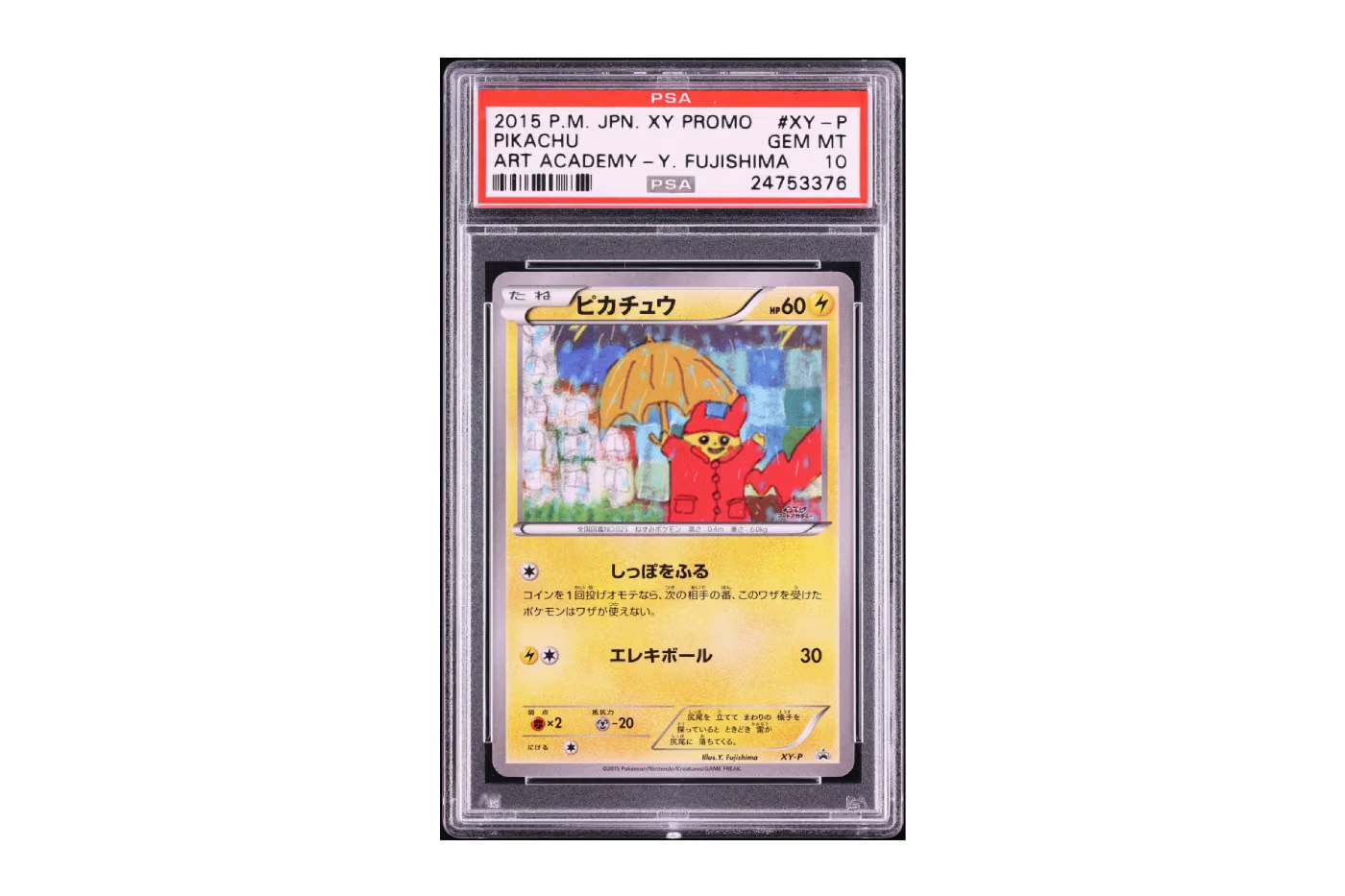
What makes the card particularly unusual is that it was never distributed through the traditional Pokémon trading card system. It was not found inside booster packs, sold in stores or included with a standard product release.
Instead, its limited supply was established from the moment it was created.
The artwork came from artist Y. Fujishima, who entered a worldwide design competition connected to the Nintendo 3DS game Pokémon Art Academy. Fujishima won the Dress-Up Pikachu category after competing against thousands of other entries.
As part of the prize, Nintendo produced just 100 official copies featuring Fujishima’s winning design. Because the cards were created specifically as a contest prize, collectors could not simply find additional copies through normal retail channels.
That fixed supply has helped make the card extremely desirable among high-end Pokémon collectors.
The “Raincoat Pikachu” nickname comes from the artwork itself. Instead of showing Pikachu in a typical battle pose, Fujishima’s design presents the Pokémon wearing a red raincoat while standing underneath an umbrella.
The softer illustration gives the card a very different appearance from conventional Pikachu artwork. Its playful, storybook-like design has also helped separate it from the many other Pikachu cards released over the years.
The example sold at Fanatics Collect carried a PSA 10 Gem Mint grade, the highest grade awarded by Professional Sports Authenticator. The combination of a perfect condition rating and an original print run of only 100 copies significantly increased its appeal.
Its recent auction result is even more striking when compared with the card’s previous sales history.
A PSA 10 copy of the same card sold through Fanatics Collect for $12,600 in July 2024. Another PSA 10 example reached $19,200 in June 2025.
The latest $8.4 million result represents an enormous increase from that $19,200 sale. Based on those reported figures, the new auction price is roughly 440 times higher than the 2025 result, with the dramatic jump occurring in only around 15 months.
The sale also arrives during a period of heightened interest in rare Pikachu cards, with several other high-grade examples recently achieving unusually large prices.
Just one week earlier, a PSA 10 2002 Legendary Collection reverse holo Pikachu sold for $780,000. That same card had previously changed hands for $264,000 in June, showing another major increase within a relatively short period.
Another PSA 10 Pikachu, the 2006 Holon Phantoms Gold Star edition, reached $480,000. Its previous reported sale was $148,800 through Goldin in February.
These sales have added to the growing attention around rare Pikachu cards, particularly examples that combine low population counts, important release histories and top condition grades.
Even with the extraordinary $8.4 million result, “Raincoat Pikachu” does not hold the overall record for the most expensive Pokémon card ever sold.
That title belongs to the Pikachu Illustrator card owned by Logan Paul. His copy sold for $16.4 million in February, setting the current high-water mark for Pokémon trading card sales.
The Pikachu Illustrator card is famous for its extremely limited distribution and connection to an early Pokémon illustration contest, making it one of the most recognizable trophies in the hobby.
“Raincoat Pikachu,” meanwhile, has its own unusual origin story. It began as a winning design in a fan-focused competition tied to Pokémon Art Academy and was transformed into a physical card through a production run capped at just 100 copies.
Its journey from a contest prize to an $8.4 million collectible highlights the extraordinary value that can