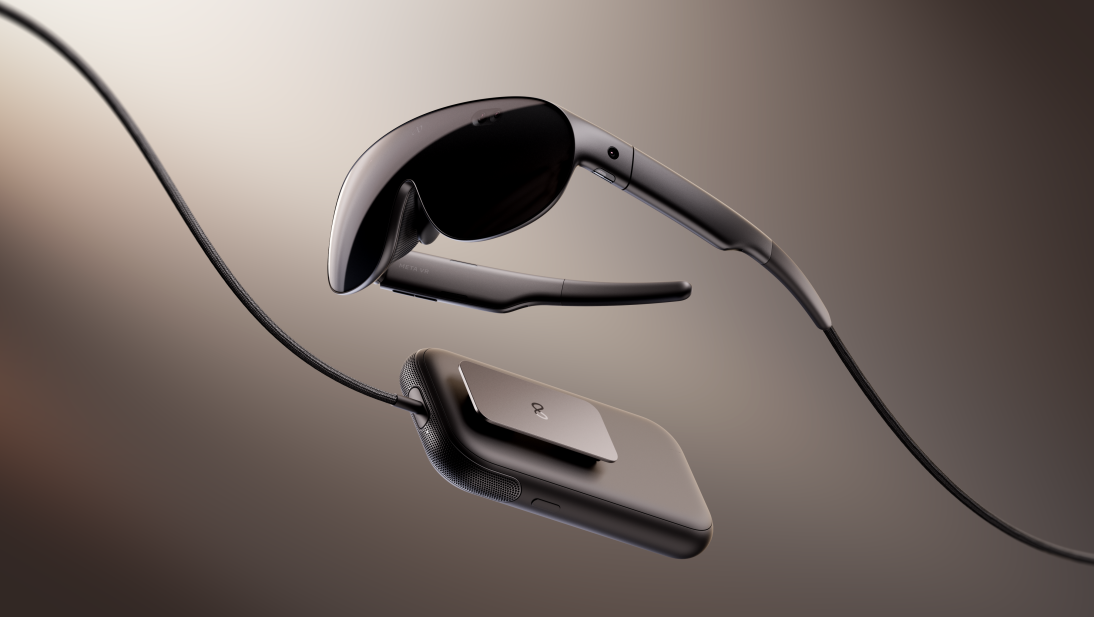

Meta is making another major push into virtual reality with a new headset designed to look and feel far less like a traditional VR device. At its Connect 2026 event on Wednesday, the company introduced its new Meta VR Glasses, which are expected to launch next spring starting at $1,299.99.
The device marks a different approach for Meta, which has spent years developing the Quest line while also exploring augmented and mixed reality. Instead of relying on the large, bulky design associated with conventional VR headsets, the new glasses are built to resemble a much more familiar pair of eyewear.
The timing is also significant. Before the unveiling, Meta CEO Mark Zuckerberg acknowledged that the company had previously decided to slow down its VR hardware efforts and concentrate on developing fewer devices until it could deliver meaningful technological improvements.
“This is a breakthrough,” he exclaimed before showing off the glasses. “A lot of people agree that augmented reality glasses with holograms are clearly going to be part of the future, but we’ve also heard that a lot of people are less interested in wearing a headset. So we have built a new kind of VR device that delivers the same magical feeling of presence and immersion with high-resolution displays and views of the world around you in a form factor that is a pair of glasses for the first time.”
One of the biggest changes is the size and weight. Meta says the new glasses are five times lighter than the Meta Quest 3, making them considerably easier to wear for extended periods. Their frames are made from magnesium alloy, giving the device a lightweight structure while maintaining the hardware needed for immersive computing.
The glasses do not operate entirely on their own. They are connected to a separate computing puck that also functions as the battery. The small device can be carried in a pocket while the glasses remain on the user, allowing Meta to move some of the processing and power requirements away from the frames.
The visual experience is at the heart of the product. Meta has built Micro-OLED displays directly into the lenses, creating what it calls a 5K Infinite Display with 37 pixels per degree. The system also supports Dolby Vision and Dolby Atmos, giving users high-resolution visuals alongside spatial audio.
Entertainment is clearly one of Meta’s main targets. Users will be able to download and watch movies directly through the glasses, turning the device into a personal cinema that can be used without a traditional television or large VR headset.
One of the most notable partnerships is with IMAX. Meta describes the new device as the “first IMAX-enhanced certified VR device ever,” giving users access to content designed to take advantage of the wider viewing format associated with IMAX theaters.
That means the glasses can display the expanded aspect ratios used by certain IMAX productions, potentially giving viewers a larger and more immersive experience than they would get from conventional screens.
The device also supports 3D entertainment. Instead of simply placing a 3D movie in front of the viewer, Meta says certain experiences can incorporate the user’s physical surroundings into what they are watching.
Meta has partnered with Disney to expand those capabilities. Starting in November, Disney+ subscribers will be able to stream selected movies in 3D through the glasses, including certain Marvel titles.
Some of these experiences are designed to go beyond simply watching a film. Meta says users will be able to see their surroundings transformed with immersive environments, dynamic effects, 3D visuals and spatial audio, effectively blending traditional movie watching with elements of a VR experience.
The glasses are also designed to make interacting with the device less dependent on traditional controllers. Meta AI will be built into the system, allowing users to control different functions through voice commands.
For example, Meta says users will be able to ask the glasses to start a movie rather than navigating through menus manually. The company is also incorporating hand gestures, giving users another way to interact with the device.
That combination of voice, gestures and immersive displays could make the glasses feel more natural to operate than conventional VR systems that rely heavily on handheld controllers.
The smaller design also changes how Meta is positioning the product. Rather than presenting VR as something users need to put on only when they want to enter a virtual world, the company is moving toward a device that resembles everyday eyewear while still providing access to immersive digital content.
The $1,299.99 starting price places the new glasses well above Meta’s more affordable Quest devices, reflecting the company’s focus on premium hardware, high-resolution displays and new entertainment capabilities.
Meta has not positioned the glasses simply as a replacement for the Quest 3. Instead, the company is presenting them as a new type of VR device that sits between traditional headsets and the lighter augmented-reality glasses it has been developing.
The entertainment partnerships could become an important part of that strategy. By bringing IMAX-enhanced content, Disney+ 3D movies, Dolby technologies and interactive environments together, Meta is attempting to make the hardware useful beyond traditional VR games.
The glasses could also appeal to people who are interested in immersive content but have avoided VR because of the weight and size of conventional headsets. Their glasses-like design is intended to make the technology feel considerably less intrusive.
Meta's announcement also shows how the company's vision for immersive computing is evolving. While the company once placed much of its attention on the broader metaverse concept, its latest hardware strategy is increasingly focused on specific experiences that can demonstrate why people might want to use immersive technology.
With the new Meta VR Glasses, the company is betting that lighter hardware, better displays, major entertainment partnerships and built-in AI can make VR more convenient and appealing.
The glasses are expected to arrive next spring with a starting price of $1,299.99.