
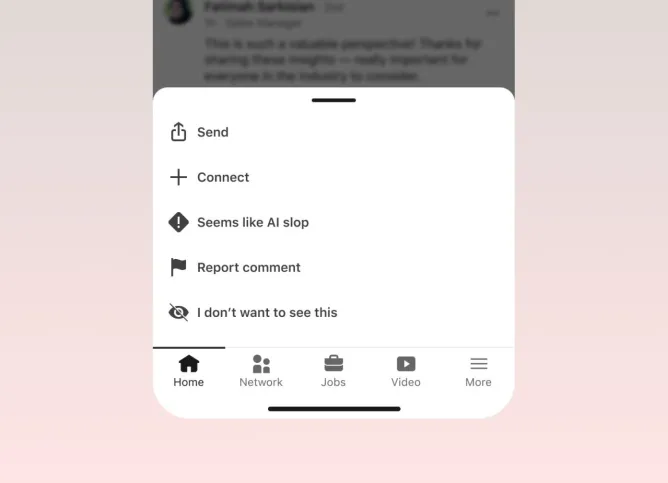
LinkedIn is stepping up its efforts to reduce the spread of low-quality AI-generated content by introducing a new reporting feature called "Seems like AI slop." The update allows users to flag posts they believe were largely created using artificial intelligence, helping LinkedIn identify and reduce content that feels repetitive, spammy, or inauthentic.
The new feature is part of a broader effort by the Microsoft-owned platform to improve the quality of conversations and ensure that users continue to see genuine insights from real professionals instead of mass-produced AI content.
The move comes as concerns continue to grow across the internet about the rapid rise of AI-generated posts. Several major platforms have already begun introducing measures to identify or limit this type of content. Newsletter platform Substack recently partnered with AI detection company Pangram to help readers identify AI-written newsletters, while Pangram also secured $9 million in funding to expand its AI detection technology.
The growing problem extends beyond social media. Internet infrastructure company Cloudflare recently revealed that automated bot traffic now exceeds human-generated traffic on the web, highlighting how quickly AI and bots are changing online activity.
LinkedIn says it is facing similar challenges. In a post announcing the update, the company's Chief Product Officer, Hari Srinivasan, acknowledged the issue.
"AI slop is a top priority for all of us. We really care about this. People come to LinkedIn to connect with real people and share their real perspectives, ideas, and expertise," he said.
Alongside the new reporting button, LinkedIn is introducing several additional measures to improve the quality of content across the platform. The company says it now blocks hundreds of thousands of automated comment attempts every day, while preventing millions of other automated activities over the past few months.
The platform is also deploying new AI-powered systems that can identify posts likely to be low-quality or heavily AI-generated. Posts identified by these systems may appear less frequently in recommendation feeds, reducing their visibility. User reports submitted through the new "Seems like AI slop" button will also help improve the accuracy of these detection systems over time.
Another new feature will privately notify users if other members believe their posts appear overly AI-generated or inauthentic. LinkedIn says this feedback is designed to help users improve their content, especially those who use AI only to polish their writing rather than create entire posts.
In addition, LinkedIn is removing its AI-powered "Enhance Your Post" writing tool. Instead of rewriting users' posts, the company will now offer a proofreading feature that helps improve grammar and clarity while preserving the author's original voice.
The company also announced several other updates, including expanded access to profile and page verification tools, as well as a new option that lets users block comments from company pages they no longer wish to interact with.
With these changes, LinkedIn joins a growing list of technology companies taking action against low-quality AI-generated content while continuing to support responsible use of artificial intelligence for editing and productivity.