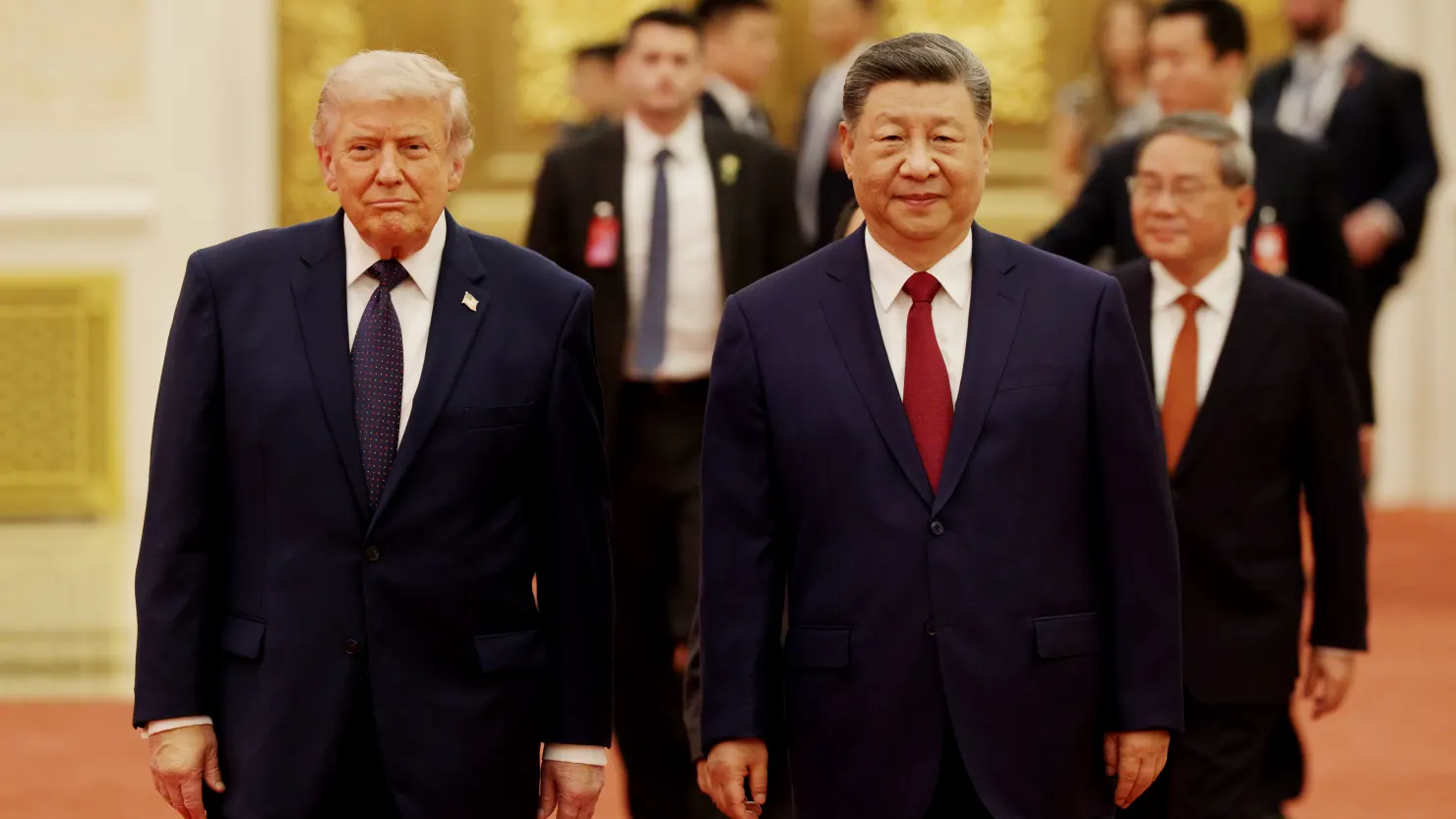

The United States and China agreed to pursue more cooperative relations during high-level talks in Beijing on Thursday. The summit brought U.S. President Donald Trump and Chinese President Xi Jinping together for discussions aimed at stabilizing a relationship that has been strained for years by disputes over trade, technology, intellectual property, and global security issues.
Both sides framed the meeting as a step toward more predictable engagement, with leaders stressing cooperation while acknowledging ongoing competition. Below are the main takeaways from the discussions.
1. A push for long-term stability
Xi Jinping and Trump agreed to build what Beijing called a “constructive China-U.S. relationship of strategic stability.” China said this framework will guide relations for the coming years, balancing cooperation with controlled competition. Officials described it as an effort to prevent tensions from spiraling out of control while keeping differences manageable.
2. Positive signals from pre-summit talks
Before the main meeting, trade representatives from both countries held preparatory talks in South Korea that were described as “balanced and positive.” China said it welcomed stronger commercial ties and further opening to U.S. businesses, while Trump’s delegation included major business figures such as Tesla’s Elon Musk and Nvidia’s Jensen Huang.
3. Expanding economic cooperation
Both governments discussed improving communication channels and expanding cooperation in areas like agriculture, tourism, and trade. The U.S. side pushed for greater Chinese market access and increased purchases of American goods, especially agricultural products. Washington also urged China to continue efforts to stop fentanyl flows into the U.S.
4. Energy security and global conflicts
The two leaders also addressed global issues including the war in Ukraine, tensions in the Middle East, and the Korean Peninsula. Both sides agreed that the Strait of Hormuz must remain open to ensure stable global energy supply. China also signaled interest in increasing oil imports from the U.S. while opposing any attempts to restrict the waterway.
5. Taiwan remains the biggest flashpoint
Xi Jinping described Taiwan as the most sensitive issue in U.S.-China relations, warning that mismanagement of the issue could lead to serious conflict. He stressed that how both countries handle Taiwan will determine whether relations remain stable or worsen significantly.