Across the world, governments are increasingly pushing to restrict or completely ban social media access for children and teenagers. The main goal is to reduce risks such as cyberbullying, addiction, mental health challenges, and exposure to harmful content or online predators.
Australia became the first country to fully implement a nationwide ban, setting a major example for others. Since then, several countries have announced similar plans or are actively working on legislation, sparking global debate about online safety, privacy, and government control.
Supporters of these laws argue that social media platforms are designed in ways that can negatively impact young users. Critics, however, warn that strict bans could raise privacy concerns due to age verification systems and may not realistically reflect how younger generations use technology. Groups like Amnesty Tech have also questioned whether outright bans are the best solution.
Despite the debate, momentum is clearly growing. Below is a breakdown of countries that have already passed, are implementing, or are considering social media restrictions for minors.
Australia
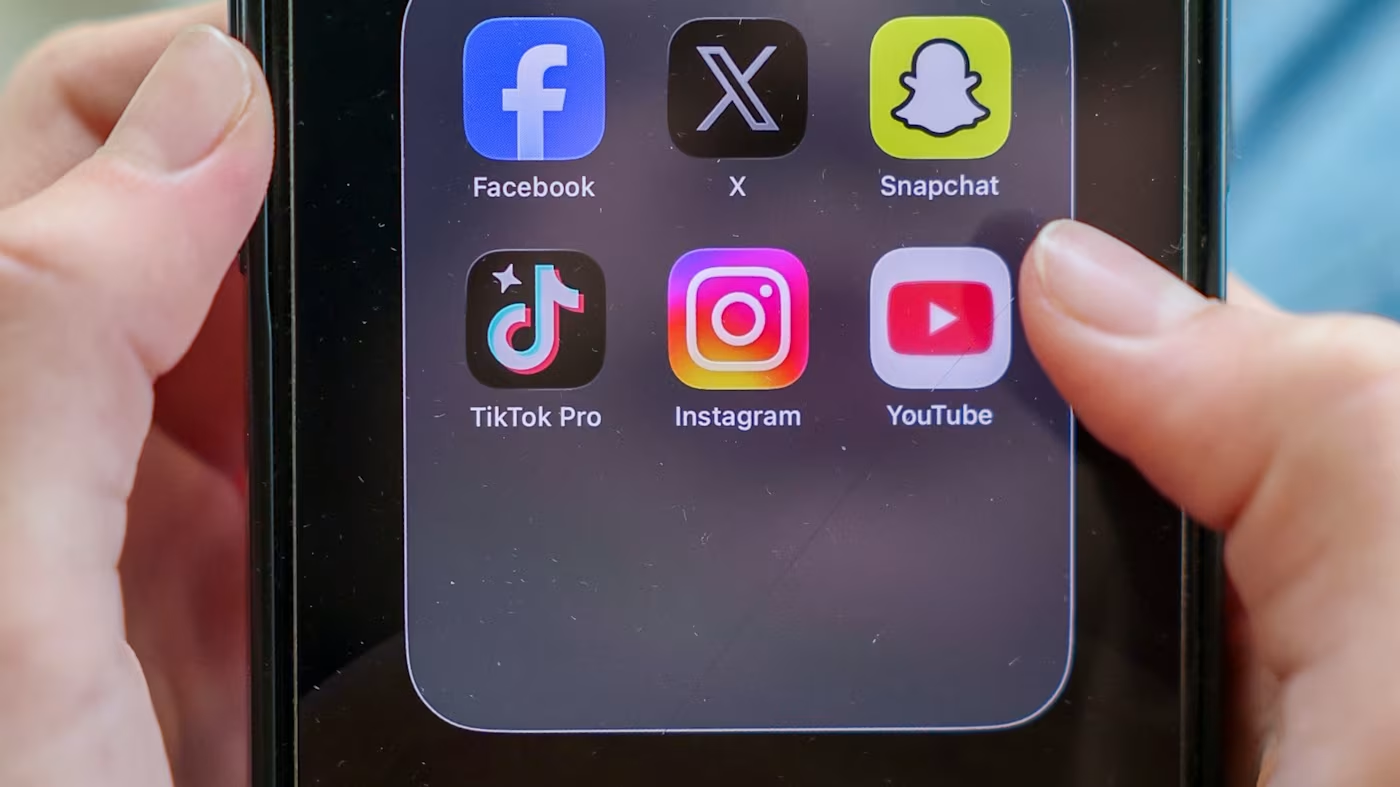
Australia introduced the world’s first major social media ban for children under 16 in December 2025. The law restricts access to platforms such as Facebook, Instagram, Snapchat, Threads, TikTok, X, YouTube, Reddit, Twitch, and Kick. However, services like WhatsApp and YouTube Kids are excluded.
Tech companies are required to take strong measures to prevent underage users from accessing their platforms. Those that fail to comply could face fines of up to 49.5 million AUD (about 34.4 million USD). The government also requires robust age verification systems instead of simple self-declared age checks.
Austria
Austria has proposed a ban for children up to age 14. Draft legislation is expected to be finalized, with further updates expected soon.
Canada
Canada has introduced a digital safety bill that would block social media access for children under 16. However, platforms may avoid penalties if they prove strong safety protections are in place. The bill is still moving through the legislative process and could take up to a year to pass.
Denmark
Denmark plans to ban social media for users under 15. The government has already secured political support, and the law could be introduced by mid-2026. Officials are also developing a digital ID system to support age verification.
France
French lawmakers have passed a bill that would restrict social media use for children under 15. President Emmanuel Macron has backed the move, but the law still needs final approval from the Senate.
Germany
Germany is discussing a possible ban for children under 16. While conservative leaders support the idea, coalition partners have shown resistance to a full restriction.
Greece
Greece plans to block social media access for children under 15 starting in 2027. The government says the policy is aimed at improving mental health and reducing screen addiction among young people.
Indonesia
Indonesia is preparing a ban for children under 16. The restrictions would apply to platforms such as TikTok, YouTube, Facebook, Instagram, X, and Roblox.
Malaysia
Malaysia has announced plans to ban social media for users under 16, with implementation expected soon.
Poland
Poland is drafting legislation that would prevent children under 15 from using social media platforms.
Slovenia
Slovenia is working on a law that would restrict social media access for children under 15, targeting platforms like TikTok, Snapchat, and Instagram.
Spain
Spain plans to ban social media for children under 16, pending parliamentary approval. The government is also considering holding platform executives accountable for harmful content.
Turkey
Turkey has passed a bill restricting social media use for children under 15. The law now awaits presidential approval.
United Kingdom
The UK is still reviewing whether to introduce a ban for children under 16. The government is consulting parents, experts, and young people before making a final decision.
The push to restrict social media access for children is becoming a global trend, with several countries already introducing laws and many more debating similar steps. While supporters argue these measures will protect young people from online harm, critics continue to raise concerns about privacy, enforcement, and real-world effectiveness.
As more governments move from discussion to legislation, the coming years will determine whether social media age bans become a global standard or remain a divided policy experiment.