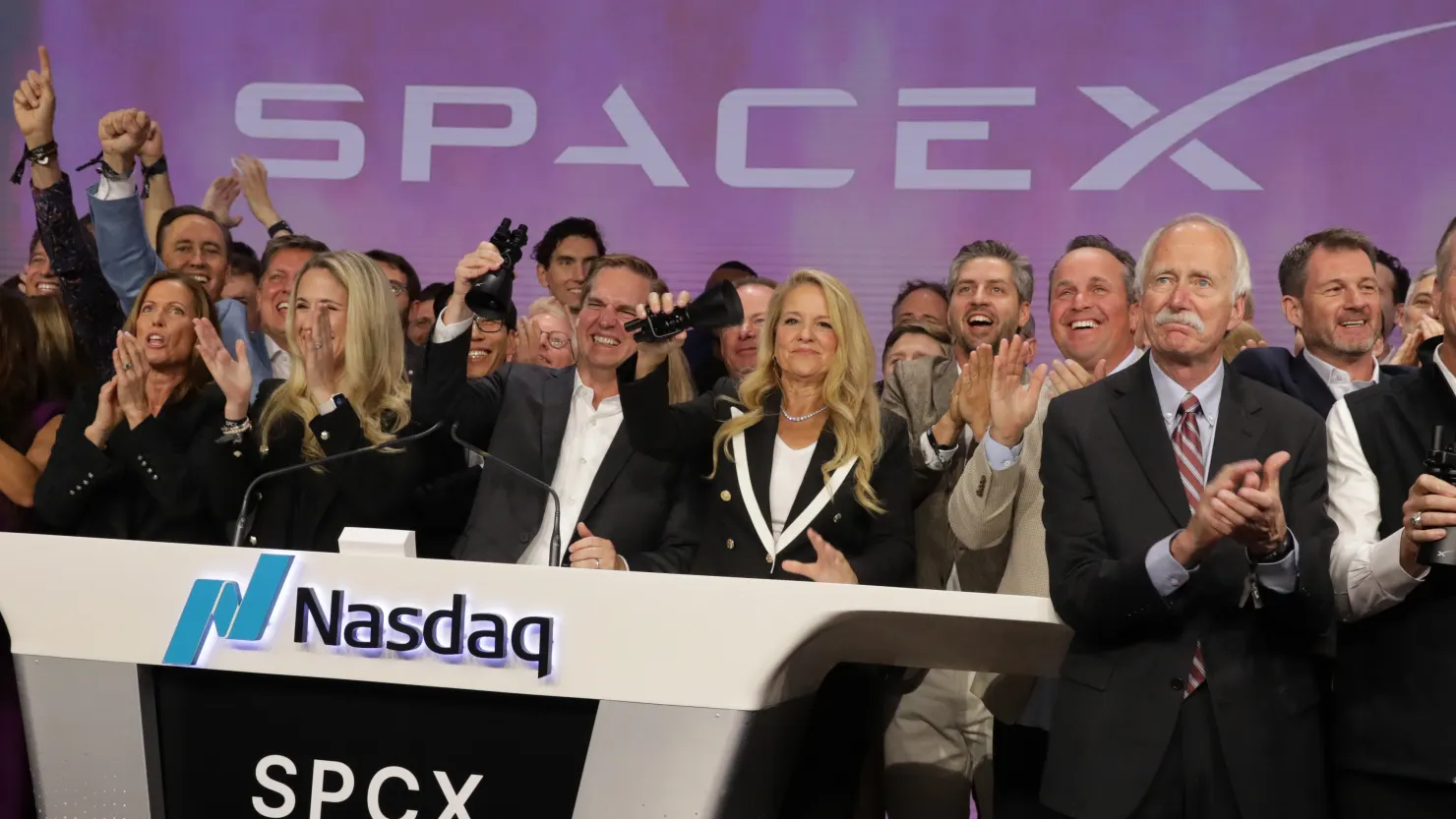

SpaceX shares rose again in premarket trading on Monday, adding about 6% as the company extended gains from its blockbuster stock market debut last week.
The stock was trading near $170 before the market opened, building on Friday’s strong rally where shares jumped 19% to close at $161. That move followed the IPO pricing of $135 per share and pushed the company’s valuation past $2 trillion, making it the largest public offering in history.
SpaceX is best known for its Starlink satellite internet network and its reusable rocket systems that dominate commercial space launches. In February, Elon Musk also combined SpaceX with his artificial intelligence company xAI, expanding its footprint into AI-driven infrastructure.
Despite the strong market debut, questions are growing around whether the valuation is sustainable. The company reportedly lost nearly $5 billion in 2025, and its massive spending plans have raised concerns among analysts.
CFRA began coverage of the stock with a “sell” rating and a 12-month price target of $115, suggesting a potential drop of nearly 29%. The firm pointed to “extremely ambitious growth strategy, elevated valuation expectations, and significant capital intensity” as key risks.
Capital spending has also surged, with SpaceX reporting $10.1 billion in expenditures in the first three months of the year compared to $4.1 billion in the same period last year. A large portion of this investment is tied to AI-related infrastructure and future expansion plans.
Morningstar analyst Nicolas Owens also described the stock as overvalued, placing his fair value estimate at $63 per share.
Not all analysts agree with the bearish outlook. NewStreet Research initiated coverage with a $165 price target and argued that SpaceX should be viewed over a much longer time horizon.
According to analyst James Ratzer, the company’s advantage in rocket launch technology gives it a strong competitive edge, particularly as it expands Starlink, direct-to-cell connectivity, and future orbital data center plans.
Ratzer also highlighted SpaceX’s dominance in space launches, estimating that it controls the vast majority of global launch capacity, with a lead that could last for years.
Still, critics argue that much of the company’s future success is based on long-term projections rather than near-term profits. As a result, SpaceX now sits at the center of a major debate between investors focused on innovation potential and those focused on financial fundamentals.