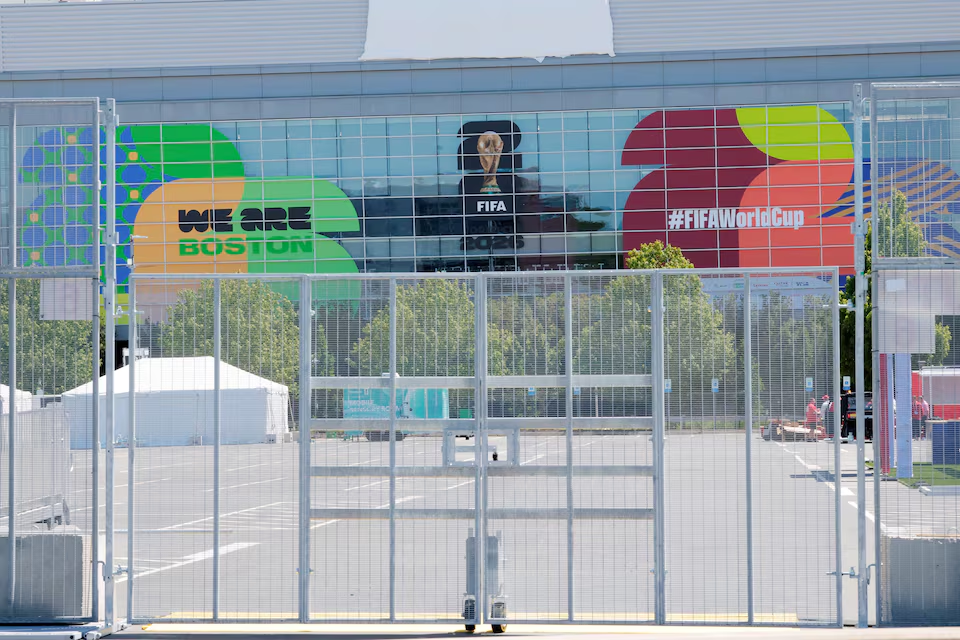

FIFA has introduced a new rule banning reusable water bottles from all World Cup stadiums, following a last-minute update to its Stadium Code of Conduct. The change comes just as preparations intensify for the 2026 tournament, which will be hosted across the United States, Canada, and Mexico.
The governing body initially allowed empty, transparent reusable plastic bottles inside stadiums. However, the updated policy now fully prohibits them, along with other containers such as cups, jars, and cans. FIFA says the restriction is aimed at preventing potential safety risks during matches.
According to FIFA, the main concern is that bottles or similar objects could be thrown inside stadiums and cause injury to players, officials, or fans. The organization emphasized that the decision is focused on maintaining a secure environment for everyone attending the tournament.
FIFA stated that safety rules at several stadiums already restrict outside bottles, and the new policy ensures a consistent standard across all World Cup venues. The update officially takes effect from Tuesday.
The decision has raised concerns among fans, especially given expected high temperatures at some host cities. Matchday conditions in certain locations are forecast to range between 26°C and 28°C, increasing concerns about hydration and comfort during games.
In response, FIFA says it is working with host cities and local authorities to manage heat conditions. Measures include misting stations, cooling fans, shaded rest areas, hydration stations, and cooling tents placed around stadium surroundings to help fans cope with the weather.
Inside stadiums, FIFA confirmed that water prices will remain consistent with other events hosted at each venue. This means there will be no special price increases during the World Cup, aiming to ensure fans can still access drinking water at standard rates.
The 2026 World Cup will feature 48 teams for the first time, expanding from the previous 32-team format. A total of 104 matches will be played, including an additional knockout round introduced to accommodate the larger tournament structure.
The competition will run from June 11 to July 19, marking the first time the tournament is jointly hosted by three countries: the U.S., Canada, and Mexico.